 *SPOILERS AHEAD*
Uncut Gems was a truly unique moviegoing experience for me.
I knew the movie was “good.” Well-crafted, well-acted, well-written. Yet, about halfway through, I considered leaving.
I never walk out of movies. If I’ve paid my $15-$20 to be there (more for IMAX), I’m seeing this thing through, even if it’s just to tell people about how bad a movie is. But even that is rare. I like going to the movies, even if the film is one I never need to see again.
Uncut Gems was singular, in that it was an objectively fine movie that I found uncomfortably stressful.
Ultimately, I stuck around.
Marty Supreme is on the same spectrum as Uncut Gems, but doesn’t land so far in the direction of discomfort. I never thought about walking out of Marty Supreme, but there were certainly moments when the movie seemed perhaps excessively stressful for the sake of heightening the audience’s emotional investment.
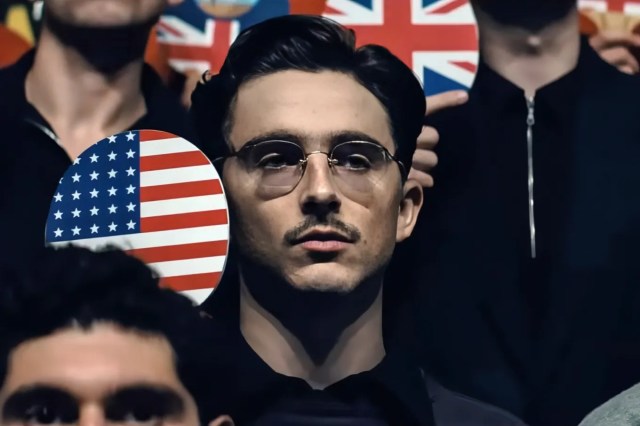
Ultimately, it works. Marty Supreme is a typically memorable A24/Safdie film that straddles a line between an intense character study and a conventional sports movie. This time, Josh Safdie goes it alone, directing and co-writing the Timothée Chalamet-led effort. The cast is superb and the performances are brilliant, especially Chalamet.
And the first hour or so is darn near perfect. The introduction of Marty requires no backstory. His personal history is treated as a throwaway line during a magazine interview, which the character himself punctuates with fake snoring, deliberately obscuring the fact that Marty’s challenging childhood fuels his insatiable desire to be somebody.
Chalamet’s performance—which will most assuredly earn him another Oscar nomination—is the gateway to the understanding of this character. This is well-executed “show-don’t-tell.” The film includes a series of little events and interactions that each demonstrates who Marty is. He is ambitious, arrogant, short-sighted, dishonest, and incredibly focused. But the hub binding all of those qualities is Marty’s belief in an inevitable, higher destiny for himself.
Marty Supreme‘s essence is the pursuit of the “American Dream” ideal. Not only as a way of achieving “greatness,” but also as a way of reaching escape velocity from a sad, ordinary, tragic past. It’s no coincidence that Marty is Jewish, living in lower-income housing with his mother, just a few years removed from World War II.
The shadow of the Holocaust still haunts the world, and it’s also not happenstance that Marty callously (and hilariously) uses the Holocaust as material to taunt an opponent in the press. The opponent, Bela Kletzki, is an actual Holocaust survivor who is actually a friend and business associate of Marty’s, and who later tells a harrowing story of perseverance involving his fellow concentration camp prisoners.
We also get hints of the role Marty’s heritage plays in his motivation, perhaps most profoundly during the only scene in the movie when he puts aside his resentment of his mother. After a barnstorming tour of the world with Bela as the Harlem Globetrotter’s halftime entertainment, Marty secretly chisels a fragment of the Great Pyramid at Giza and smuggles it back to the United States. He wraps it up as a present for his mother, and, after she opens it, he says, “We built this.”
The film is set in 1952, but, curiously, includes numerous 1980s songs as part of its soundtrack. I found this choice fascinating, and spent considerable mental energy during the movie trying to puzzle out the reason for the choice.
The reason for the 1952 setting is obvious: factually, it had to be set in that particular year because of the confluence of post-WWII American culture and a pivot point for table tennis, including the lifting of the travel ban for Japanese competitors. A quick glance at the world table tennis champion list from 1952 forward reveals an unmistakable and dramatic shift toward Japan and then China as Asia came to dominate the sport.
There’s also a point that people who don’t know much about the sport may miss entirely: Marty’s complaints about Koto Endo’s paddle might be understandably dismissed as the immature American throwing a tantrum. This would be entirely in character for the impetuous Marty.
But there’s much more to it than that. Instead, this objection references the fact that the invention of the sponge racket in the 1950s completely changed table tennis. A hard-paddle player taking on a competitor of equal or near-equal skill who used a sponge racket and an unfamiliar grip would have likely played out the way that the first Mauser-Endo match transpired in the film.
All of those plot aspects makes sense, and required the movie to be set in 1952.
But why the 80s music?
During the first hour of the film, I was convinced it was simply a reference to a particular type of sports movie—bombastic, colorful, dramatic-if-obvious. I thought this was Safdie’s nod to Marty’s table tennis aspirations being very much of that kind of synth-heavy, in-your-face, over-the-top (and Over the Top!) dream.
But the movie takes so many circuitous detours in the second hour that I decided that my original explanation can’t be right. Instead, I think it’s more about Marty being a man out of time. His behavior and personality seem downright bizarre for 1952, up to and including characters (especially older characters) reacting to him as if he’s borderline insane. The fact that his name is “Marty” is probably just because of Marty Reisman, on whom Marty Mauser is loosely based.
But it also occurred to me that it’s a passing reference to Marty McFly, as another time-traveler from the 1980s who winds up in a 1950s that seems strange and confusing.
The cast of Marty Supreme is astounding. I don’t merely mean that the performances are good, which they are, but that the eclectic mix of performers (including some non-actors) is striking. Beyond the strong key players (Chalamet, Gwyneth Paltrow, Tyler the Creator, and Odessa A’zion—who should also be nominated), the list of actors I was surprised to see in the film (Fran Drescher, Isaac Mizrahi, Ted Williams, George Gervin(!)) rivals the list of actors I didn’t even realize were in the film until I read the credits, including Sandra Bernhardt, David Mamet, and Tracy McGrady(!). And I only realized Penn Jillette was Penn Jillette because I had seen him in a pre-release promotional photo. Had it not been for that, he would have been completely unrecognizable.
Eminently recognizable is Kevin O’Leary, who is essentially playing himself. This is not a criticism. Safdie correctly identified that O’Leary was perfect for the part. O’Leary is incredibly convincing as pen mogul Milton Rockwell, and there are points in the movie where you get the sense that he’s not even really acting. Rather, he’s just genuinely delivering the kind of sincere, biting monologues he’s used to devastate underprepared Shark Tank contestants. This is all wonderful (and all-Wonderful!).
I think my only quibble with this movie goes back to my original point about Uncut Gems. There are a few elements of Marty Supreme that seem like unnecessary kinks in the road that heighten stress for the audience in ways that aren’t actually essential to the central plot. This includes some dog-in-peril scenes. The movie probably works without a couple of these, even as a pure character study.
This isn’t necessarily a negative, but another contrast with Uncut Gems is that there is a very different treatment here of actions and consequences. Whereas Uncut Gems is a gut-wrenching, meticulous placement of dominoes that will eventually, inevitably topple and crush the protagonist under their immense weight, Marty Supreme doesn’t work like that.
I count a minimum of three separate incidents in which Marty is involved that could at least qualify as attempted murder. And that’s to say nothing of theft, fraud, or other non-violent crimes with which Marty is involved, including public lewdness. Yet, with the exception of his uncle putting a scare into him during one scene using some NYPD friends, which ends with Marty hiding in some garbage to avoid capture, he never really comes close to facing punishment from law enforcement. Nor do other characters who engage in illegal acts, including at least one (probable) murder that takes place in broad daylight in front of dozens of witnesses.
And perhaps that’s another reason why this movie needed to be set in 1952. The idea of getting away with so much mayhem in 2025 (or even 1985) would transcend the implausible and bleed into the impossible.
The movie ends with two scenes that likely speak to the ultimate lesson and personal growth Marty experiences. In the final showdown with Endo, Marty prevails and bursts into tears of joy and relief. He knows that he is, in fact, the best in the world.
But he then returns to the United States to meet his newborn child. Upon seeing the baby, he has an even more powerful reaction than he did when he had achieved greatness in his chosen sport.
As “Everybody Wants to Rule the World” plays and the final credits roll, we can imagine how the rest of Marty’s life plays out. He does, in fact, become the manager of his uncle’s shoe store, having been jolted into reality by his new baby—the greatest thing he has ever experienced, trumping even the acquisition of the dream he had pursued for as long as he could remember.
That unexpected realization—that something “mundane,” that billions of people have done, somehow surpasses Marty’s perception of being “special” is the character’s abrupt entry into adulthood. His life of irresponsibility and living moment-to-moment is now at an end.
And his tears come as a result of the sudden and unexpected epiphany that what will truly make him great—what will make him “Marty Supreme”—is family, and giving his child the support that he never had, breaking the cycle of dysfunction and trauma that drove him to his maniacal pursuit in the first place.


 The Axis of Ego
Timely Movie Review: Marty Supreme
Uncut Gems was a truly unique moviegoing experience for me.
I knew the movie was “good.” Well-crafted, well-acted, well-written. Yet, about halfway through, I considered leaving.
I never walk out of movies. If I’ve paid my $15-$20 to be there (more for IMAX), I’m seeing this thing through, even if it’s just to tell people about how bad a movie is. But even that is rare. I like going to the movies, even if the film is one I never need to see again.
Uncut Gems was singular, in that it was an objectively fine movie that I found uncomfortably stressful.
Ultimately, I stuck around.
Marty Supreme is on the same spectrum as Uncut Gems, but doesn’t land so far in the direction of discomfort. I never thought about walking out of Marty Supreme, but there were certainly moments when the movie seemed perhaps excessively stressful for the sake of heightening the audience’s emotional investment.
Ultimately, it works. Marty Supreme is a typically memorable A24/Safdie film that straddles a line between an intense character study and a conventional sports movie. This time, Josh Safdie goes it alone, directing and co-writing the Timothée Chalamet-led effort. The cast is superb and the performances are brilliant, especially Chalamet.
And the first hour or so is darn near perfect. The introduction of Marty requires no backstory. His personal history is treated as a throwaway line during a magazine interview, which the character himself punctuates with fake snoring, deliberately obscuring the fact that Marty’s challenging childhood fuels his insatiable desire to be somebody.
Chalamet’s performance—which will most assuredly earn him another Oscar nomination—is the gateway to the understanding of this character. This is well-executed “show-don’t-tell.” The film includes a series of little events and interactions that each demonstrates who Marty is. He is ambitious, arrogant, short-sighted, dishonest, and incredibly focused. But the hub binding all of those qualities is Marty’s belief in an inevitable, higher destiny for himself.
Marty Supreme‘s essence is the pursuit of the “American Dream” ideal. Not only as a way of achieving “greatness,” but also as a way of reaching escape velocity from a sad, ordinary, tragic past. It’s no coincidence that Marty is Jewish, living in lower-income housing with his mother, just a few years removed from World War II.
The shadow of the Holocaust still haunts the world, and it’s also not happenstance that Marty callously (and hilariously) uses the Holocaust as material to taunt an opponent in the press. The opponent, Bela Kletzki, is an actual Holocaust survivor who is actually a friend and business associate of Marty’s, and who later tells a harrowing story of perseverance involving his fellow concentration camp prisoners.
We also get hints of the role Marty’s heritage plays in his motivation, perhaps most profoundly during the only scene in the movie when he puts aside his resentment of his mother. After a barnstorming tour of the world with Bela as the Harlem Globetrotter’s halftime entertainment, Marty secretly chisels a fragment of the Great Pyramid at Giza and smuggles it back to the United States. He wraps it up as a present for his mother, and, after she opens it, he says, “We built this.”
The film is set in 1952, but, curiously, includes numerous 1980s songs as part of its soundtrack. I found this choice fascinating, and spent considerable mental energy during the movie trying to puzzle out the reason for the choice.
The reason for the 1952 setting is obvious: factually, it had to be set in that particular year because of the confluence of post-WWII American culture and a pivot point for table tennis, including the lifting of the travel ban for Japanese competitors. A quick glance at the world table tennis champion list from 1952 forward reveals an unmistakable and dramatic shift toward Japan and then China as Asia came to dominate the sport.
There’s also a point that people who don’t know much about the sport may miss entirely: Marty’s complaints about Koto Endo’s paddle might be understandably dismissed as the immature American throwing a tantrum. This would be entirely in character for the impetuous Marty.
But there’s much more to it than that. Instead, this objection references the fact that the invention of the sponge racket in the 1950s completely changed table tennis. A hard-paddle player taking on a competitor of equal or near-equal skill who used a sponge racket and an unfamiliar grip would have likely played out the way that the first Mauser-Endo match transpired in the film.
All of those plot aspects makes sense, and required the movie to be set in 1952.
But why the 80s music?
During the first hour of the film, I was convinced it was simply a reference to a particular type of sports movie—bombastic, colorful, dramatic-if-obvious. I thought this was Safdie’s nod to Marty’s table tennis aspirations being very much of that kind of synth-heavy, in-your-face, over-the-top (and Over the Top!) dream.
But the movie takes so many circuitous detours in the second hour that I decided that my original explanation can’t be right. Instead, I think it’s more about Marty being a man out of time. His behavior and personality seem downright bizarre for 1952, up to and including characters (especially older characters) reacting to him as if he’s borderline insane. The fact that his name is “Marty” is probably just because of Marty Reisman, on whom Marty Mauser is loosely based.
But it also occurred to me that it’s a passing reference to Marty McFly, as another time-traveler from the 1980s who winds up in a 1950s that seems strange and confusing.
The cast of Marty Supreme is astounding. I don’t merely mean that the performances are good, which they are, but that the eclectic mix of performers (including some non-actors) is striking. Beyond the strong key players (Chalamet, Gwyneth Paltrow, Tyler the Creator, and Odessa A’zion—who should also be nominated), the list of actors I was surprised to see in the film (Fran Drescher, Isaac Mizrahi, Ted Williams, George Gervin(!)) rivals the list of actors I didn’t even realize were in the film until I read the credits, including Sandra Bernhardt, David Mamet, and Tracy McGrady(!). And I only realized Penn Jillette was Penn Jillette because I had seen him in a pre-release promotional photo. Had it not been for that, he would have been completely unrecognizable.
Eminently recognizable is Kevin O’Leary, who is essentially playing himself. This is not a criticism. Safdie correctly identified that O’Leary was perfect for the part. O’Leary is incredibly convincing as pen mogul Milton Rockwell, and there are points in the movie where you get the sense that he’s not even really acting. Rather, he’s just genuinely delivering the kind of sincere, biting monologues he’s used to devastate underprepared Shark Tank contestants. This is all wonderful (and all-Wonderful!).
I think my only quibble with this movie goes back to my original point about Uncut Gems. There are a few elements of Marty Supreme that seem like unnecessary kinks in the road that heighten stress for the audience in ways that aren’t actually essential to the central plot. This includes some dog-in-peril scenes. The movie probably works without a couple of these, even as a pure character study.
This isn’t necessarily a negative, but another contrast with Uncut Gems is that there is a very different treatment here of actions and consequences. Whereas Uncut Gems is a gut-wrenching, meticulous placement of dominoes that will eventually, inevitably topple and crush the protagonist under their immense weight, Marty Supreme doesn’t work like that.
I count a minimum of three separate incidents in which Marty is involved that could at least qualify as attempted murder. And that’s to say nothing of theft, fraud, or other non-violent crimes with which Marty is involved, including public lewdness. Yet, with the exception of his uncle putting a scare into him during one scene using some NYPD friends, which ends with Marty hiding in some garbage to avoid capture, he never really comes close to facing punishment from law enforcement. Nor do other characters who engage in illegal acts, including at least one (probable) murder that takes place in broad daylight in front of dozens of witnesses.
And perhaps that’s another reason why this movie needed to be set in 1952. The idea of getting away with so much mayhem in 2025 (or even 1985) would transcend the implausible and bleed into the impossible.
The movie ends with two scenes that likely speak to the ultimate lesson and personal growth Marty experiences. In the final showdown with Endo, Marty prevails and bursts into tears of joy and relief. He knows that he is, in fact, the best in the world.
But he then returns to the United States to meet his newborn child. Upon seeing the baby, he has an even more powerful reaction than he did when he had achieved greatness in his chosen sport.
As “Everybody Wants to Rule the World” plays and the final credits roll, we can imagine how the rest of Marty’s life plays out. He does, in fact, become the manager of his uncle’s shoe store, having been jolted into reality by his new baby—the greatest thing he has ever experienced, trumping even the acquisition of the dream he had pursued for as long as he could remember.
That unexpected realization—that something “mundane,” that billions of people have done, somehow surpasses Marty’s perception of being “special” is the character’s abrupt entry into adulthood. His life of irresponsibility and living moment-to-moment is now at an end.
And his tears come as a result of the sudden and unexpected epiphany that what will truly make him great—what will make him “Marty Supreme”—is family, and giving his child the support that he never had, breaking the cycle of dysfunction and trauma that drove him to his maniacal pursuit in the first place.
Share this:
Related