The Company Man, Revisited

Tonight, December 13, 2025, will mark the final appearance of John Cena as an in-ring competitor.

After he completes his Saturday Night’s Main Event match against Gunther, his run as a performer will be complete.

The fact that his last match will air exclusively on the Peacock streaming service in the U.S. (and on YouTube internationally) is an appropriate footnote that speaks to the business’s transformation during Cena’s long, wildly successful run.

Cena has achieved innumerable milestones during his career, including a (canonical) record 17 world championship reigns. He has been loved, hated, and, ultimately, loved again. He has been vociferously cheered and lustily booed—perhaps uniquely so, often at the same time.

That long road ends tonight, with Cena still relatively young, still in good health, and still popular. As he has hinted, this, too, is unique.

Professional wrestling has long been associated with retirements that don’t quite stick. Even high-profile, perfect send-offs like the ones that men like Ric Flair or Shawn Michaels received at WrestleMania aren’t permanent once the “itch” returns, creditors come calling, or Saudi Arabia backs up a truckful of oil money to your front door.

A wrestler still in his 40s (hardly ancient by pro wrestling standards) vowing that he’s about to have his last match inevitably receives a healthy and justified measure of skepticism from wrestling fans who have seen this play out hundreds of times before, only to have the competitor in question come back for a “special appearance” or a final nostalgia run.

Cena seems different. When he says that this will be permanent, I believe him.

And that makes me reflect on a piece I wrote in the early days of this blog, titled “The Company Man.” It’s still the most-read post in the history of this blog. The piece ran in 2012, when a significant portion of the WWE audience despised Cena, even though he was positioned solidly as both a “good guy” and as the company’s main attraction. There, I said:

He is, by all relevant accounts, the genuine article.  He perpetually adheres to his onscreen principles, even in—especially in—the face of adversity.  Off-screen, he moves more merchandise than anyone else.  He has never had a wellness issue or a run-in with law enforcement.  He is a dedicated supporter of the military and various charities.  He relishes the opportunity to be a role model.  By any objective measure, he is a massive success.

Still, they boo.

I made the point that, by 2012, the “Super Cena” criticism of him as a perpetual winner was unfounded and had been for some time. Yet, they booed him. They booed him because he represented a “corny” character, consistent with the less-edgy creative direction that the company took several years earlier.

I concluded the piece by saying:

There will come a time some indeterminate number of years from now when John Cena’s departure from wrestling won’t be temporary.  Part of me believes that only Cena’s eventual retirement will be enough to make his most strident critics respect his contributions to the business, even if they didn’t happen to like the presentation of his character.

Whenever that day comes, I think the perspective necessary to appreciate John Cena fully will come with it.  People will realize that he was right about a great many things.  They’ll understand the significance of the fact that the first item he addressed when he arrived at the WrestleMania 28 press conference podium was the Make-a-Wish pizza party he was hosting that weekend.

Maybe Cena is the flipside of “Superstar” Billy Graham.  Perhaps Cena’s career retrospective could be titled “Twenty Years Too Late.”  Even if he is, and even if he was, his critics may someday realize that the character Hulk Hogan portrayed so adeptly was little more than who John Cena is in real life.  They might realize all of this.

And then they’ll miss him.

Now, we’re here.

Happily, I think Cena’s intermittent absences from WWE since I wrote that piece have, indeed, made the WWE fanbase’s collective heart grow fonder. The teenage and 20-something male demographic that largely led the anti-Cena sentiment of the late 2000s and early 2010s has also gained perspective and perhaps mellowed with age. Cena not being “cool” or “edgy” enough for them when they were 17 or 21 or 25 doesn’t matter anymore. Meanwhile, the children who cheered Cena back then never stopped.

Over the past half-decade or so, Cena has enjoyed fan reaction that is as increasingly positive as his appearances are increasingly infrequent. Thankfully, a combination of time, perspective, evolving business sensibilities, and the receding of anger over the pivot away from “Attitude” has allowed the audience to fully appreciate Cena in the way he deserves.

Cena is perhaps the last true wrestling hero in the mold of the performers and characters who helped define and elevate wrestling for decades.1 Cena obviously isn’t the last great wrestler in the technical sense. There is a greater number of athletically gifted performers in the business now than there have ever been, and Cena would be the first to admit that that was never his strong suit.

Rather, he may be the last great believer—the rare top guy who treated wrestling not like a job, not even like a profession, but like a responsibility. An obligation to himself, to his company, and to the public.

He was the standard-bearer for the WWE through an era that insisted on irony, and he did it without irony himself: showing up, taking the heat, taking the losses when asked, and never once blinking on the values he sold to kids—even when “smart” teens and young adults mocked those same “corny” values.

In a business whose history is rooted in the con, he was the real thing—and the older we get, the more we understand how uncommon that is. When the bell rings tonight, it won’t just be the end of a career; it’ll be the end of a particular kind of trust.

As the business continues down a road of erasing the lines between on-screen and off-screen “reality,” Cena is the last performer to come from an era before those lines were fully blurred who also lived up to the unrelenting “good guy” character he portrayed.

Put more bluntly: the last time is now.

I miss him already.

______________________________

  1. Although Cody Rhodes, to his great credit, has done a masterful job of following that classic babyface template as well as anyone possibly could in the current era ↩︎
Posted in Commentary, General Culture and News, Sports, Television | Tagged , , , , , , , , , , , , , , , , | Leave a comment

On Charlie Kirk and Free Speech

Ours is a society built, in part, on the notion that free speech is both practically beneficial for our culture and intrinsically good.

A true commitment to free speech is, however, a rather unusual value.

It isn’t merely the case that repressive, totalitarian regimes don’t value speech as we do. As we’ve seen recently, even a “Western democracy” like the United Kingdom is often seduced by other values that it prioritizes over free speech, leading it to impose systematic punishment for mere ideas—or even jokes.

At least during my lifetime, we Americans have been special (perhaps unique) in the preeminence we assign to free speech. But all it takes to undermine this core value is the proliferation of the simple, misguided idea that disagreement justifies violence; that it is acceptable to use force to silence, injure, or even kill someone for expressing an idea that is contrary to the ideology that you hold dear.

This poisonous philosophy can metastasize quickly into related ideas like “my enemies are Nazis” and “we all know that it’s ok to punch Nazis!” and “I’M going to punch a Nazi!!!”

It’s a short walk from there to “killing those who threaten my ideology—the one true ideology, naturally—is actually a public service, and it is my duty to do it. For the common good, of course.”

The Foundation for Individual Rights and Expression (FIRE) released its annual college free speech report yesterday. One of the top-line findings: “A record 1 in 3 students now holds some level of acceptance – even if only “rarely” — for resorting to violence to stop a campus speech.”

One in three.

Not one in three violent criminals. Not one in three profoundly mentally ill people. Not one in three radical extremists.

One in three college students.

One in three college students will NOT say that violence is never acceptable to stop a campus speech.

A speech.

Respectfully, people who talk about “toning down rhetoric” miss the point. I understand that argument, and I don’t advocate for inflammatory rhetoric, either, but the real lesson students—and everyone—should be learning is to be resilient in the face of ideas we don’t like.

Resilience, not violence.

The “cure” for speech we don’t like has always been more speech.

Unfortunately, a very different lesson has been taught to and adopted by an increasingly large portion of our populace, particularly the college-educated. Namely, the destructive idea that “speech I don’t like is violence.” And, relatedly, “actual violence to counter speech I don’t like is justified.” See, e.g., the latest FIRE report.

Even today, in the wake of the horrific murder of Charlie Kirk, the response to that act is instructive. When you hear prominent voices equivocating, or focusing on what they deem to be Kirk’s so-called “hate speech,” ask yourself if these individuals actually believe in the principle of free speech, or if their beliefs align more with those of the one in three college students FIRE identified.

And therein lies the much larger problem. The people who tacitly—or explicitly—believe that violence is a reasonable reaction to certain speech have reached critical mass. This trend must reverse. And fast.

Unfortunately, such trends seldom do recede quickly, taking almost as many years to unravel as they did to build.

Today’s assassination of Charlie Kirk—on a university campus, amid an event premised on peaceful, cross-ideological dialogue—not only disturbs and shocks us; it confirms our most pessimistic fears about the direction of our country.

A society that even tacitly allows someone to be killed for their words or beliefs alone has crossed a moral Rubicon. We must insist, with every fiber of our civic conscience, that speech is never violence, violence is never speech, and ideas alone never justify violence.

If there is reason for hope in this dark hour, it is that Charlie Kirk’s death may serve as a defining pivot: not to yet more violence, but to a renewal of the bedrock principle that disagreement deserves engagement, not eradication.

If we choose to turn away from that principle, we risk irreparable damage to a country built on the courage to speak and the resilience to listen.

Posted in Commentary, General Culture and News, Politics | Tagged , , , , , | 3 Comments

Timely Movie Review: Fantastic Four: First Steps

*MILD SPOILERS AHEAD*

Fantastic Four: First Steps is the most uncomplicated MCU movie since, well, Iron Man.

The premise is simple and explained in summary form during the movie’s first few minutes.  If you’ve ever read a Fantastic Four comic, you probably already know it: four normal people on an otherwise-ordinary Earth get exposed to cosmic rays, which unexpectedly give them unique powers, changing the course of human history.

When two members of the Fantastic Four—Reed Richards (Pedro Pascal) and Sue Storm (Vanessa Kirby)—have a baby, a cosmic entity suddenly takes interest in the child, leading to potentially disastrous results.

And that’s it.  Good guys have to stop the big bad guy from destroying Earth or taking their child, little Franklin Richards.

Continue reading

Posted in Commentary, Movies, Reviews | Tagged , , , , , , , , , , , , , , , , , , , | 1 Comment

Timely Movie Reviews: F1 The Movie and Superman

*SPOILERS AHEAD*

Some quick hits on the two most recent movies I’ve seen in a theater.

F1 The Movie

It’s funny to put a spoiler warning at the top, since anyone with an IQ over 90 who saw the trailer can probably provide a nearly-perfect outline of the major plot points of this one.

Nonetheless, it’s a fun watch, thanks in large part to Joseph Kosinski’s ability to provide a visceral viewing experience thanks to his devotion to mind-blowing, practical filming of large, expensive machines.

While F1 is no Top Gun: Maverick, the two movies share some of the same strengths.  Additionally, the Hans Zimmer score is perfectly suited for the action and adds to the white-knuckle moments when F1 is at its best.

Continue reading

Posted in Commentary, Movies, Reviews | Tagged , , , , , , , , , , , , , , , , | 3 Comments

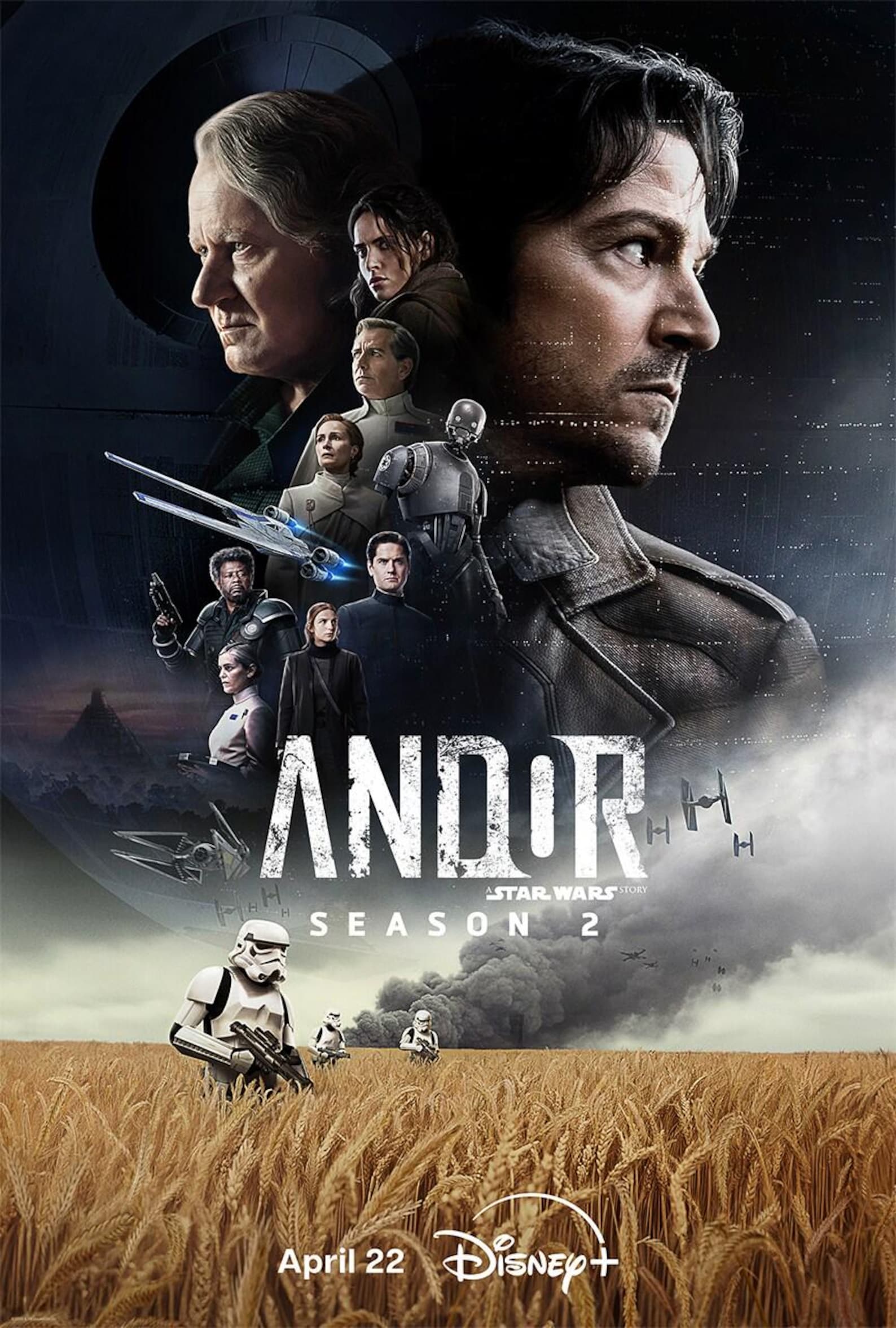
Timely Streaming Review: Andor (Season 2)

*SPOILERS AHEAD*

I’m of two minds when it comes to Andor.

It is unquestionably a great TV show.  Andor’s first season is rivaled only by the first season of The Mandalorian in terms of Star Wars projects that approach the quality of the original trilogy.

The story, the pacing, the compelling characters, and the judicious use of well-crafted action sequences are all excellent.  The second and final season of Andor is nearly as good, but faced a higher degree of difficulty, as it was already sandwiched between the events of the first season and those of the looming, inevitable Rogue One.

To put it into nerd-ese, the show had to get from 5 BBY (for you non-geeks, this means five years before the events of the original movie) to just before the events of Rogue One, which, in turn, lead directly to Episode IV.

In other words, the minds behind Season 2 had to decide whether to cover four years in 12 episodes or have one major time jump toward the end of the series or not have the series leave off precisely where Rogue One picks up.

Continue reading

Posted in Commentary, Reviews, Television | Tagged , , , , , , , , , , , , , , , , , | Leave a comment

Timely Movie Review: Mission: Impossible – The Final Reckoning

*SPOILERS AHEAD*

The Mission: Impossible movie franchise has had a unique trajectory.

The first installment was a better-than-average 90s spy thriller that was mostly an updated, big-budget version of the TV show.  Built around Tom Cruise’s star power, M:I gets points for a few clever effects and an iconic infiltration scene (Cruise suspended in silence in an all-white room at Langley).

The second film tried to be something more, but largely failed: A so-so John Woo-directed outing that relied too much on slow-motion shots and a cartoonish villain with less nuance even than the first film.  Still, there were some fun action sequences—and, most importantly, the movie made money.

The third installment showed much more promise.  Philip Seymour Hoffman was superb as the villain, but, perhaps due to the lackluster second outing, M:I III wasn’t as profitable as either of its predecessors.

Still, there was some magic.  Ghost Protocol and Rogue Nation nailed the formula: exotic locales, insane Cruise stunts, better pacing than 1 or (especially) 2, a more robust supporting cast, including a larger role for Simon Pegg as Benji Dunn.

Fallout is probably the best possible version of this type of movie.  IMAX eye candy abounds, and Henry Cavill is a perfect adversary for Cruise, the first time the series gave Cruise a foil who, crucially, seemed like a younger, upgraded version of Hunt.  The film also cleans up one of the only negatives of four and five: the confusing status of Hunt’s relationship with his wife. Continue reading

Posted in Commentary, Movies, Reviews | Tagged , , , , , , , , , , | Leave a comment

Let’s All Make Fun of Tom’s Brackets (2025 Edition)

I don’t even know who I am anymore.

Today, on the first day of March Madness, I voluntarily scheduled three different meetings for this afternoon.  Three.  And I never even thought twice about it.

The high school student who shared my classmates’ glee when the TV cart rolled into the classroom on the first Thursday and Friday of the tournament would shake his head in disgust if he could see me today, and not just because of my salt-and-pepper, jowl-y, middle-aged decline.  I’m not even the guy I was in 2019—the hero who reserved the large office building conference room so that I could display every game on enormous, wall-mounted monitors as my adoring colleagues and I watched them.

Instead, I am this broken-down husk of a sports fan who knows almost nothing about college basketball anymore, outside of the fact that my Richmond Spiders went a woeful 10-22, and that the SEC somehow managed to get 14 of its teams into the NCAA bracket.

Armed with the knowledge that the almighty committee believes the fourteenth-best team in the SEC is more deserving of a bid than the second-best team in the Atlantic 10, I feel much better about my decision to (largely) ignore college basketball before late March.

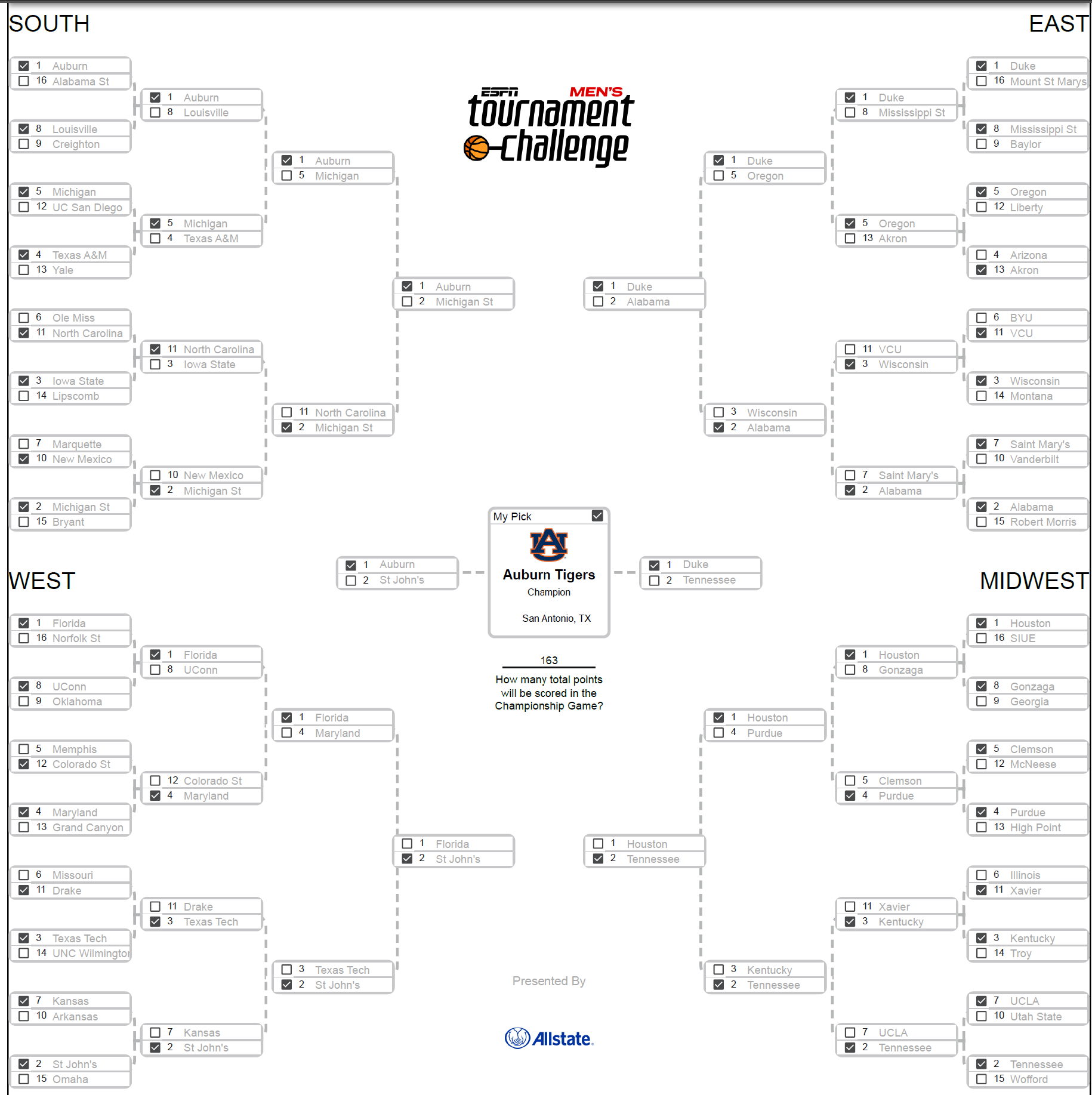
With all of that said, I’ve obviously created a bracket this year.  It’s below, and it might be the most conservative bracket I’ve ever picked.  If the #1 and #2 seeds don’t do well, I’m toast.  It’s almost more like a women’s bracket, with the top two seeds consistently advancing with little difficulty until the regional finals.

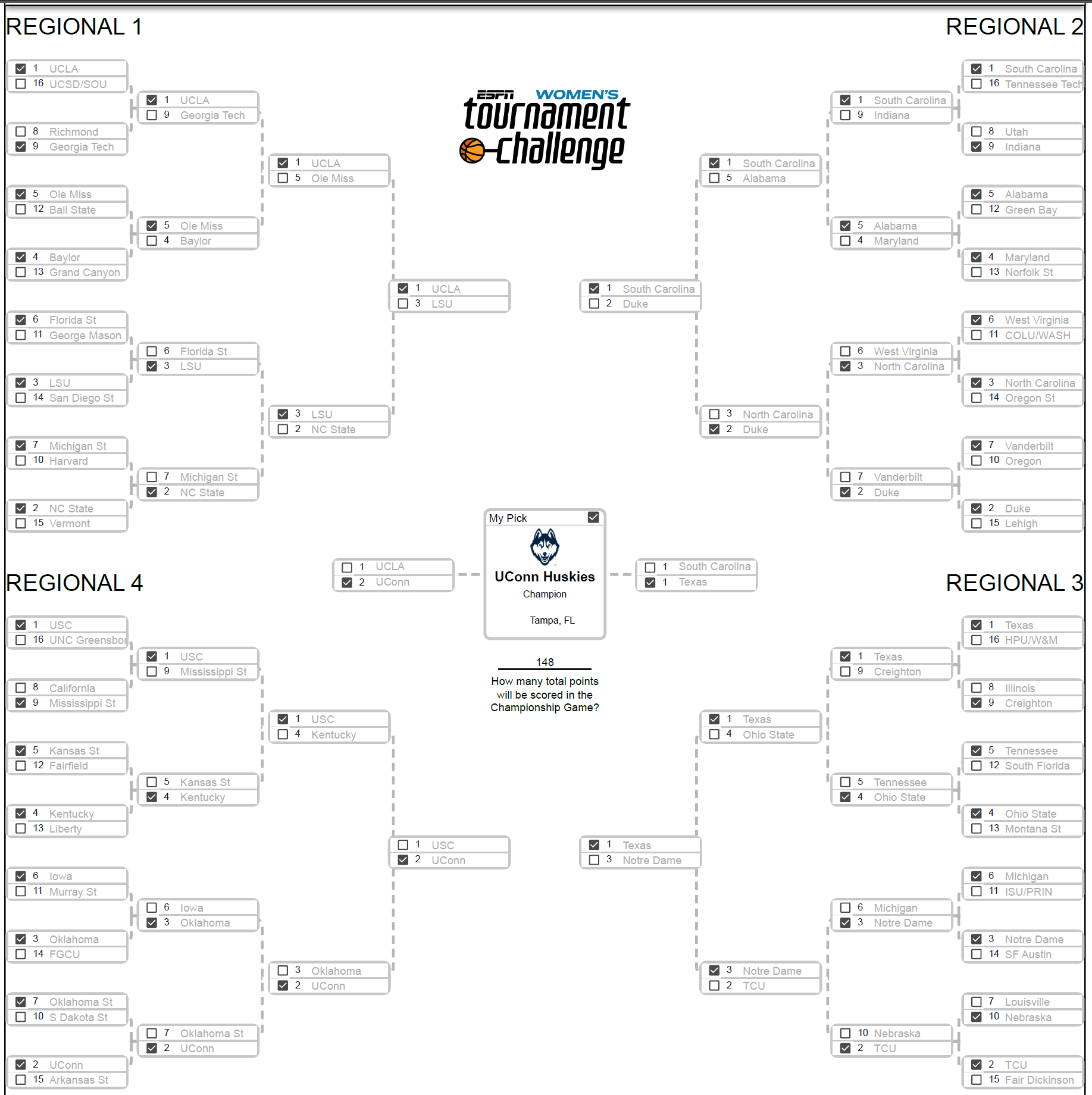
Speaking of, I’m even including my women’s bracket this year as a bonus.  That’s largely because my actual women’s bracket was in the 99.9th percentile last year until Iowa lost in the finals—and I still finished in the 84th percentile.  This luck-masquerading-as-expertise has emboldened me.

Except when it comes to the picks themselves.  I’m ultra-conservative on both brackets this time around.  My men’s semi-finals feature two #1 vs. #2 match-ups, with overall #1 seed Auburn winning it all.  My women’s Final Four has three #1 seeds, although I do stick my neck out by daring to pick a #2 seed to win the title, as I have UConn and Geno Auriemma collecting their 12th trophy.

I guess it makes sense that both brackets were equally reserved this year, since I watched about as much women’s basketball as I did men’s in 2024-25.

So, fans, enjoy these brackets, prepared by someone who is barely aware of the sport, and who, as he sits here late in the afternoon on the first day of the tournament, hasn’t even so much as turned his TV on:


Posted in Commentary, Sports | Tagged , , , , , , , | Leave a comment

2024 Election Spoiler Alert!

We’re nearing that most cherished of American civic traditions: the dignified, peaceful transfer of power that follows an uneventful, orderly election.
It’s a beautiful thing to witness, isn’t it?  Filled with civic pride and patriotism, I’ll cast my ballot today here in Virginia, waving to my fellow citizens as I enter and exit my polling place.  Wishing them a great day, I’ll smile and exchange a knowing nod with Americans whose own partisan preferences pale in comparison with the feeling of shared cultural norms and commonality during this most “holy” of secular rituals.

Ok, maybe that’s not exactly true, but let’s get down to brass tacks: who’s gonna win this thing?

I have some thoughts.  Five, to be specific.

1. Polls matter, but not when they’re this close.  Count me among those who question the reliability of polls in recent cycles, but I don’t reject polls per se.  What I mean is—I totally accept the science of statistical analysis and polling.  It’s just that every poll showing a virtual tie or a one-percent margin to either side doesn’t tell us much.  So, yes, we can say confidently that Harris is going to win Illinois and Trump is going to win Ohio, but polling alone isn’t helpful in indicating the ultimate outcome in the states that will determine the election.

2. Other, more marginal indicators (“tells”) do matter, I think.  Something new is happening in 2024.  I haven’t seen Democrats run toward Trump in any of the prior “Trump” election cycles, from 2016 through 2022.  Until this year, Democrats have always run away from Trump (and demonized him), rather than tying themselves to him or using him in a positive way.  But Bob Casey and Tammy Baldwin are doing just that.  To be clear, many Democrats (especially Harris) are obviously still running “Orange Man Bad” strategies.  But if these swing-state Dems in close Senate races thought Trump were a net negative, they wouldn’t dare invoke his name in anything resembling a favorable light.  That’s why I think Trump will win both Pennsylvania and Wisconsin, albeit narrowly.

3. “Trump,” as a political concept, has been largely normalized.  Even his critics would probably (begrudgingly) agree that the the median voter is now desensitized to the stylistic chaos and bluster that surrounds Trump.  I would go so far as to say that a decent percentage of voters who couldn’t stomach voting for him in 2016 now, eight years later, are either willing to hold their nose and do so, or actually find him amusing or likable and will enthusiastically support him.  Most of what seemed shocking in 2015 or 2017 or even 2020 has now been habituated by the American public.  Further undermining the apocalyptic warnings about Trump is the fact that we already have four years of data of him as president!  All of that matters, as the cries of “Trump is Hitler” don’t carry as much weight as they did in prior years—except to zealots and would-be assassins, I guess.

4. Media influence is at an all-time low.  This is not to say it’s nonexistent.  The media’s pivot from “Biden should drop Kamala” to “Kamala is a good candidate” as soon as she ascended to the nomination resulted in a significant popularity surge.  But people largely distrust the media, with even Democrats’ trust level slipping to 54 percent.  More importantly, independents are at a mere 27 percent (Republicans are down to 12).  This matters because slanted framing or blatant bias has less influence on voters than it did even just a few years ago, which helps Trump.

5. Social media suppression is less prevalent.  The well-documented suppression of the Hunter Biden laptop story in the weeks leading up to the 2020 election rightfully raised the ire of many.  And both the public and the companies involved learned an important lesson about trusting “experts” and suppression of speech.  Moreover, the purchase of X (formerly Twitter) by Elon Musk, coupled with the admission (and regret) by Mark Zuckerberg over Facebook’s role in content removal, have created an environment in which it is much more difficult for outside forces to suppress narratives unhelpful to their cause.  Just recently, the New York Times attempted a last-ditch effort to get YouTube to silence or punish heterodox / conservative content creators right before the election, using “evidence” of “misinformation” as the basis.  To its credit, YouTube didn’t bite.  I think the outcome would have been the reverse in 2020.

With all of the above in mind, I think Trump wins the election.  He overperforms in certain tight states (e.g. Nevada) and wins enough swing states to secure the Electoral College victory.  I’m not sure he’ll win the popular vote, but I am sure that this is the best chance he’s had to win it in his three bids.  This is the map as I see it:

What jumps out to me is how narrow Harris’ path is.  Trump could win a number of different swing-state combinations and prevail, while Harris more or less needs a sweep.  For example, Trump could actually lose Wisconsin or Pennsylvania in the above scenario and still win the election.  Likewise, if he wins both of them, he could absorb an upset loss in, say, North Carolina, and lose Nevada or Arizona, and still prevail.

For Harris, barring upsets in places like Georgia, she would need to carry Minnesota, Michigan, Wisconsin, and Pennsylvania.  And even that combination only gets her to 270 on the nose, with no margin for error elsewhere.

I have one final, bonus thought.  I sincerely hope I’m wrong about this part, but . . . depending on what happens over the next few days (weeks?  months?!?  God help us.), prepare yourself for a deluge of hypocrisy and flip-flopping by some of the loudest political voices on a variety of issues.

First, if Harris somehow wins the Electoral College with Trump winning the popular vote, expect all of the calls for abolishing or “reforming” the EC to abruptly vaporize as the politicians and academics who support such a move miraculously and simultaneously “re-think” their decades-long opposition.  For some reason!

More seriously, if Trump does win, many of the people who have been lecturing politicians and the public about “election denialism” for the past four years will suddenly revert to the posture they had when Stacy Abrams lost in Georgia in 2018, or when they tried to influence electors to change their votes and called Trump “illegitimate” when he won in 2016.

Election denial or undermining results may once again be framed as noble and virtuous.  Hypocrites will swiftly discover “credible” reasons why a victorious Trump either isn’t eligible to be president or didn’t actually win.  The media will dutifully amplify and corroborate these arguments.

They will also helpfully “retcon” much of what has been said on that topic over the past four years to make the hypocrisy more resemble a consistent, principled stance—similar to how they retconned the assertion that Harris ever had the unofficial role of “border czar” (perhaps “gaslit” is the correct term).

If that doesn’t work, aggrieved Regime members will likely craft a new narrative once Trump in office as to why his victory owes to “illegal” or “impeachable” conduct of some kind.  Rinse and repeat.

But, for many of the reasons stated above, I don’t think most of the public will buy it.

Good luck out there, my fellow Americans!

Posted in Commentary, Politics | Tagged , , , , , , , | Leave a comment

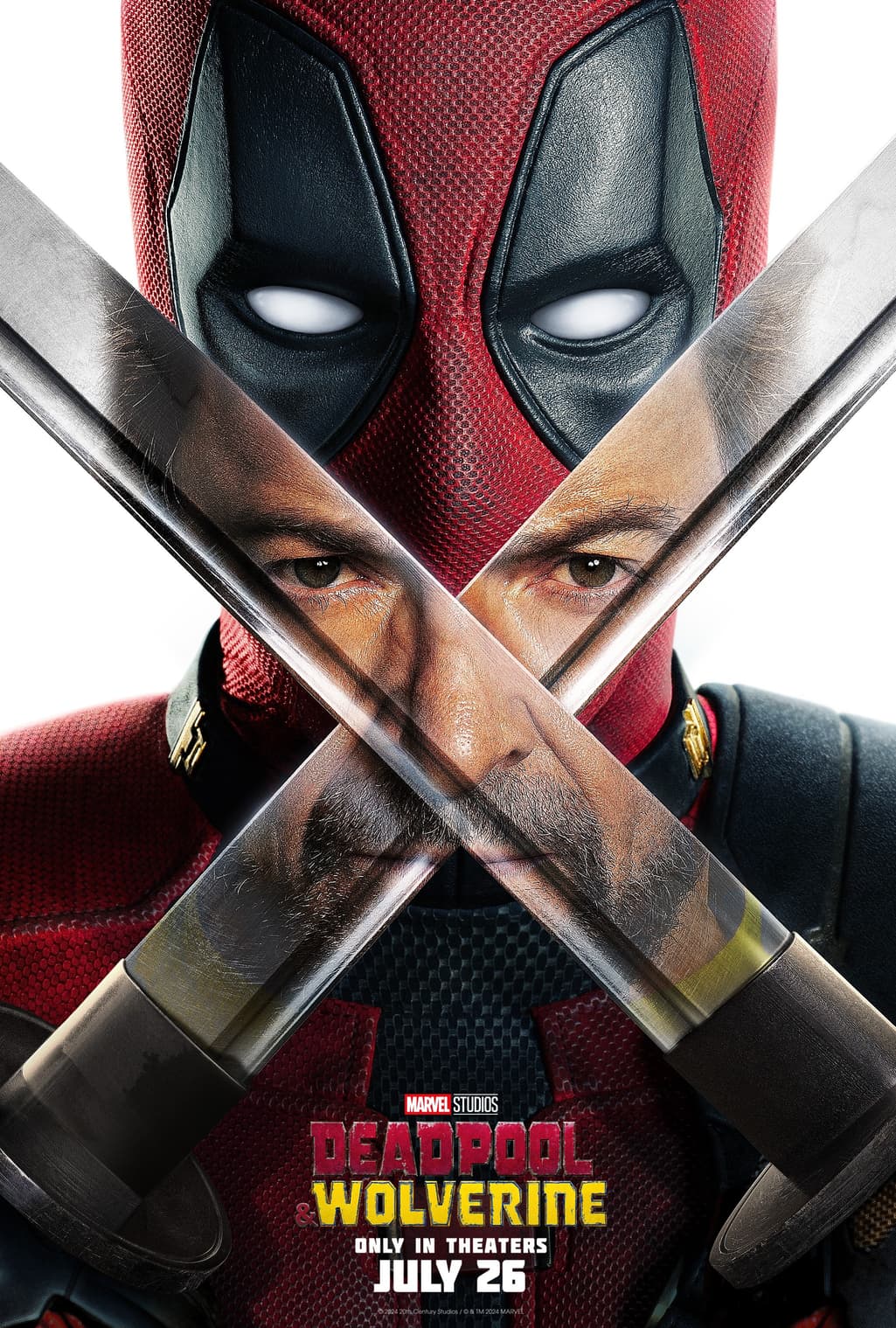
Timely Movie Review: Deadpool & Wolverine

*SPOILERS SPOILERS SPOILERS*

Your experience with Deadpool & Wolverine will vary wildly depending on your expectations.

If you’re craving a strong story comparable to the upper half of MCU fare, albeit with more jokes, you’re likely going to have a middling time at best.

If you’re instead looking for R-rated violence, self-aware meta humor that often satirizes the MCU, and fan-servicing cameos aplenty, then you’ll be very happy.

The challenge for an MCU Deadpool was always going to be two-fold: one, would Disney allow an unabashedly R-rated character to exist in its universe?  I can safely report that the Deadpool we get this time out is every bit as raunchy and profane as the one we saw in the Fox outings.

Two, how do you incorporate a character like this into an existing cinematic universe that (She-Hulk aside) does not break the fourth wall?  Will the tone work, and, probably more importantly, does Deadpool as a character “break” the MCU?  Here, the results are inconclusive.

After watching She-Hulk, my final verdict was that the Disney+ show was watchable, but, despite crossovers with existing core MCU characters, it would basically need to be treated as non-canon.  To some extent, I wound up in a similar place watching Deadpool & Wolverine, but the film side-steps the issue a bit by having Deadpool interact almost exclusively with Fox Marvel characters.  His only extended interaction with an “Earth-616” character comes in a scene with Happy Hogan.

This scene makes little sense, by the way, as there’s no clear explanation for how Deadpool is even able to reach Earth-616 in 2018, aside from the assumption that Cable’s gadget from Deadpool 2 did the trick.  But that gap in the plot speaks to the larger point about this movie: the story really isn’t that important.  Nor is it intended to be particularly tight (and, trust me, it is not).  Deadpool is absurd by design, and the jokes work best as standalone meta comedy, rather than James Gunn-style, story-based humor.

As such, Deadpool & Wolverine winds up less as Deadpool’s bridge to the MCU (it really isn’t, in fact!) and more of an expletive-filled love letter to Deadpool fans, as well as a surprisingly sincere farewell to Fox’s now-dead Marvel universe.

The jokes are too numerous to mention, but my favorite actually comes in the opening scene.  While Deadpool takes cover behind a fallen treed, A TVA trooper gives a little speech informing Deadpool that he’s under arrest.  As the speech unfolds, Deadpool groans and says “Ugh.  Death by day player.”

Other favorites included Deadpool’s commentary on Gambit’s dialect coach, Elektra not lamenting the death of Daredevil, and Deadpool inexplicably wasting time by taunting Logan with gags through the window of the security door in the climactic scene.

Bringing back a host of Fox characters and actors was also a treat, especially Chris Evans, Jennifer Garner, Wesley Snipes, and Channing Tatum (finally getting to play Gambit).  Most of all, Dafne Keen returns as X-23 to provide tonal assistance to Hugh Jackman, who does almost all of the heavy lifting in this movie, acting-wise.

Ultimately, where you rank this film in the Deadpool franchise will depend on how much you value the “I-can’t-believe-Disney-let-them-do-that” aspect of many of the jokes, including barbs that gently criticize the current slump of multiverse-mired MCU films.  If that scenario sounds especially appealing to you, this entry probably winds up at #1.  Reynolds is a comedic home run, Jackman is a superb actor as always, and his constant annoyance with Deadpool is very entertaining.

For me, the original Deadpool is still the best.  It was not only very inventive, but it also had a much more complete story.  As noted, the story in Deadpool & Wolverine is an afterthought—basically a delivery system for more fourth-wall-breaking bits.  The story doesn’t really “fit” with any existing canon, but it’s probably not supposed to.  Example: Logan explicitly took place in 2029, but, for the sake of the “using Logan’s corpse to kill TVA troops” gag, it all implicitly happens in or before 2024.

Not only that, but the entire idea of an “anchor being” is painfully contrived, even by superhero movie standards.  However, without that contrivance, I suppose the movie can’t happen.

There’s also no real reason that Paradox pulls Deadpool out of his native reality in the first place.  He vaguely tells Deadpool he’s “special,” and that he’ll add him to the “sacred” timeline (616), but there’s no explanation beyond that.  This problem could have been fixed very easily by telling Deadpool that he has some kind of “meta-consciousness” that allows him to perceive events and realities beyond the one he occupies.

This would not only explain why Paradox wanted to save Deadpool from his universe’s destruction, it would also clarify the origin of Deadpool’s fourth-wall breaks in a way that makes sense and fits nicely within the existing MCU.  In a nutshell, Deadpool has the ability to intuit that there is a larger reality / other realities and reacts to that in real time.  To the other people around him, he simply looks slightly insane.  All of that would take care of the second problem I described above.

Given its minimal interaction with the mainline MCU, unless you count the TVA from Loki, I would even go as far as to say that Deadpool still hasn’t really joined the MCU.  We’ll probably have to wait until the next Avengers movie to see Deadpool truly join the MCU.  If nothing else, though, Deadpool & Wolverine was a funny, fitting send-off for the Fox Marvel universe.  And that’s more than enough.

Posted in Commentary, Movies | Tagged , , , , , , , , , , , , , , , | Leave a comment

The Hitler – Trump Hypothetical, Revisited

A few hours after Election Day 2020, with the notion of a “stolen” vote already the hottest topic in politics, I wrote a piece explaining why such an idea wasn’t ridiculous.

It wasn’t because I believed that the 2020 election was “stolen” (I don’t), or because I supported President Trump’s fiery, sometimes conspiratorial rhetoric (again, I don’t).  But what struck me was the claim by Trump’s critics that the suggestion of election improprieties was simply absurd and insulting.  I said the following at the time, discussing the classic ethical question of whether it is just to murder baby Hitler:

The crux of the [Hitler] question is whether it is ethical to kill someone when he is still an innocent child, long before he commits crimes against humanity.  Many people would say that the greater good absolutely demands it.  Others would say that there is no excuse for violating a core principle of morality, not even for Hitler.

Now consider a softer, if equally impossible hypothetical.  You can travel back in time and manipulate the elections of 1930, 1932, and/or 1933 in Germany to prevent Hitler’s rise to power. No killing is involved.  Just ballot and voter fraud.  And the hypo assumes that your scheme would be effective.  Would you do that?  I think we can all agree that a substantial percentage of the population would.

Now recall that we’ve been told for the past four years that Trump is essentially an American Hitler, or on the way to being Hitler.

While I find that comparison silly, the lesson here is that there are plenty of people who truly believe it’s apt to analogize Trump to Hitler.  From their point of view, present-day America is at the “1932 or 1933 in Germany” phase.

With all of that in mind, do you think such people would hesitate to adopt a “by-any-means-necessary” mentality in a close race?

I don’t.  Not for a second.

Emphasis added.  At the time, I was quite certain that continuing to equate Trump with a person widely recognized as the worst of the past century (if not in history) would result in more and more rationalization about what is ethically, morally, and politically acceptable to stop him.  Later in the piece, I added:

Again, these [vocal Trump critics in the media and the Democratic Party] are the same sort of folks whose proposed solution to alleged norm-busting by the GOP is to eliminate the filibusterpack the courtsadd a couple of new states to change the composition of the Senate, and, of course, abolish the Electoral College.  To repeat: they propose these measures as an alleged defense of norms.  They do so without a hint of irony.

What I didn’t anticipate at the time was that Trump would be attacked as vigorously by media and political opponents after he was out of office as he was while he was in office.  This makes sense in hindsight, as these folks clearly saw Trump as a continued threat, such that they needed to be relentless in their dogged efforts to prevent a second Trump term.

The obvious problem is that this relentlessness requires ever-escalating warnings, fearmongering, and, ultimately, tactics.  Our own American media and many politicians have demonstrated little reluctance to call Trump “Hitler” for the past eight years—and continue to do so.

Now, we’re here.  And I’m not sure what it will take to pull us back from the edge of the abyss before we fall in.

Posted in Commentary, General Culture and News, Politics | Tagged , , , , , , , , , , , | 1 Comment