All of my student loans are paid in full as of this month. Therefore, as a newly minted AMERICAN HERO, I thought I would share my wisdom with folks who haven’t yet crossed that sacred threshold. I thought these pointers would be particularly helpful to people under 40 (like me) who are facing, or are projected to face, major financial hurdles as a result of their crippling debt.
Here are some tips, courtesy of a Real American:
1. Study Hard: Do well at your current level of schooling, and the next level will be cheaper. There is a lot of scholarship money out there. People will trip over themselves to give it to you. Filling out paperwork is a pain in the ass, especially when you’re 17 (or even 21 or 35), but the fact that you’re simply willing to fill it out puts you ahead of most of the other lazy people who populate your generation. There’s no excuse for not getting at least a little scholarship money if you’re even a mediocre student.
2. Be Good at Standardized Tests: Especially when you’re moving on to grad school, nailing a standardized test can count just as much, if not more, than your undergrad GPA (except for medical school applicants). Get a high score now, pay less later. When in doubt, pick “C.”
3. Don’t Get Married: Courtship costs money. Weddings cost money. As Haddaway asked lo those many years ago—what is love (when compared to the sweet satisfaction of knowing Sallie Mae or MOHELA no longer has its hooks in you)? I’m paraphrasing the lyrics, but we all know that that was the obvious subtext. Love won’t keep your electricity on. Love won’t put a roof over your head. You certainly can’t eat love. But that extra few hundred bucks a month can do all of that—and more! IMPORTANT PROVISO: If your potential spouse is an earner, or is, like, super-rich or something, marriage and paying off loans may not be at cross-purposes. Choose wisely.
4. Don’t Have Children: Marriage costs money, but kids cost a lot of money. And, unless you hit the jackpot in an “Olsen Twins”-type scenario, there’s not even a potential for a ROI like there is with #3 above. Avoid. Again, what is the joy of bringing another life into this world, one to whom you can impart your values, when measured against the pleasure of knowing you can quietly mutter “There, but for the grace of God, go I” whenever one of your classmates talks about having to sell his car to get creditors off his back? Easy call.
Don’t be like this loser!
5. Go to College in the 1990s: Everyone knows that tuition costs have skyrocketed in recent years. I graduated from college in 2000, so most of my undergrad career occurred in the 90s. So, despite going to an excellent, fairly expensive school for that era, my bills were still moderately lower than what someone attending a middle-of-the-road university could expect to pay today. The solution: Go to college in the 90s. You’ll save a bundle. IMPORTANT PROVISO: Going to college in the 80s is probably an even better idea, but I can’t speak to that from personal experience.
Following these five simple tips will help you to pay off all of your student debt in a decade (or less!), freeing up the remainder of your 30s to rationalize your poor life choices and to mock losers who complain that they can’t get a high-paying job with their laughable philosophy, sociology, or art history degrees.
Here’s a random observation accumulated by watching far too many hours of sporting (and sports-entertainment!) events over the past couple of years: Domino’s has a strange theory on what kind of advertising will make people want to buy their pizza products (or, if you prefer, “pizza-like” products).
Here are some of the puzzling strategies:
1. We are really bad at making pizza: The first step down this bizarre path was an advertising campaign featuring Domino’s CEO Patrick Doyle in which he admitted that Domino’s had (has?) terrible pizza, but that the company vowed to do better. The ads included some comments from Domino’s head chef (I know, I was just as surprised as you were), who felt a little insulted by the whole thing, but nonetheless promised to improve. Here’s a mini-documentary that includes a lot of the footage used in these ads.
There were also versions that addressed poor service and delivery.
That was a fairly bold move, and certainly a memorable one. But Domino’s didn’t stop there.
Sometime in December, I found one of those “do-not-disturb”-style signs hanging from my doorknob. It had a lengthy message explaining that work crews would be in the area to replace / improve certain components in our local gas system. The flier advised that the crews would be working on this project for four-to-six weeks, and that the project might involve turning the gas off (which necessitates calling the gas company to have a different crew come out to turn it back on), or irregular street parking rules.
To repeat: That was December.
The crews are still in the area.
To be fair, they haven’t been on my street in a few weeks. In their wake, however, are muddy, lumpy, straw-topped yards formerly covered with grass, as well as poorly patched holes dug daily bulging out from previously smooth streets.
Despite the unappealing aesthetics of the aftermath of the work, I reserved comment on the quality of the project. After all, I know absolutely nothing about gas line improvements.
But after not giving it much thought, I noticed something among the many spray-painted lines and symbols of various colors also left as markers by the work crews:
Wait . . . what?
Unless I’m very much mistaken, this means that a “professional” looked at the underground set-up of the various lines, shrugged, and basically said, “I dunno. Water? Gas? Fiber-optic? Power? Not sure. Moving on . . . ”
A six-week project taking three months is one thing, but this is scary.
These hieroglyphics don’t exactly instill confidence in me that I won’t come home one day to find that my beloved house has been replaced by a smoldering crater.
After all, the last time I saw markings like that was . . .
“Twitter friend” Matthew Timmons authors a must-read website for wrestling fans called kafabermetrics (a play on “Sabermetrics”) in which he dutifully tracks statistical information based on the performances of the various WWE superstars. Like a Bill James for the squared-circle set, Timmons also attempts to use this information (plus his own knowledge) to predict the card for WrestleMania each year.
That’s proven to be a more daunting task than usual in 2014.
In fact, he began his most recent prediction article with the following confession: “Can I tell you a secret? I have no idea what the f*** is going on.”
I think a lot of fans are in that same boat.
So, I decided that I would take a crack at divining where the WWE’s creative direction is headed over the next month-and-a-half. In doing so, I will use absolutely no analytical data whatsoever, and instead rely only on my own half-baked notions about narrative integrity and dramatic storytelling.
I wrote a piece last August arguing that new anti-bullying laws would inevitably lead to the enforcement of such provisions butting up against First Amendment rights. In it, I wrote:
Several potential problems with the policy became clear rather quickly. First, the decision over what material satisfies the vague test for being “inappropriate” or constituting “cyberbullying” is now entirely at the discretion of school administrators. Secondly, a student need not even write the offending post himself: A Facebook “like” or Twitter re-tweet is enough to trigger the punishment provisions of the policy.
The major concern I identified was that schools were now reaching far beyond the schoolhouse doors to enforce vaguely-defined policies that punished speech-based conduct that was otherwise legal. I anticipated that the application of these policies would lead to absurd results, such as someone being kicked off of the school football team for “liking” the wrong page on Facebook during his free time.
Jimmy Fallon’s ascension to the Tonight Show throne – even if that chair doesn’t have the luster it once did – is imminent.
With the Winter Olympics looming, NBC has begun promoting the new Tonight Show heavily. Two things have jumped out at me about the spots I’ve seen so far. First, it’s going to be The Tonight Show Starring JimmyFallon. That’s an interesting change, as Jay Leno quickly dispensed with the “starring” tag in favor of the more humble “with” shortly after taking over the show from Johnny Carson, citing the fact that he thought a word like that should be reserved for someone like Carson.
The second, less-subtle feature is the list of hosts presented in the new ads. One of them even goes so far as to say that “only five men” have ever hosted The Tonight Show. Here’s the list that the version of the ad I linked above presents: Steve Allen, Jack Paar, Johnny Carson, Jay Leno, Conan O’Brien.
As I was doing my grocery shopping in Ukrop’s Martin’s two weeks ago, I noticed an elderly woman in the produce department who seemed to be struggling. What caught my attention was the fact that she looked like she was trying her hardest to stand on her tip-toes, an unusual set of movements for a woman over 70.
I quickly realized that she was attempting in vain to reach something. I couldn’t see what it was from the side of the aisle in which I stood. I hastily made my way around to where she was, and said “Ma’am, do you need help with something?”
She seemed very happy and relieved someone had stopped. She chuckled and said “I want that right there,” extending a bony finger in the direction of an onion that had rolled to the back of the very top of the display. I retrieved it for her, she thanked me profusely, and I said I was happy to assist.
The very next week, I was pushing my cart near the front of the store when I passed the canned goods aisle and an even older woman caught my attention with a telltale tip-toe attempt.
I hurried over to her and asked if she needed anything, just as she was precariously stepping up onto the bottom shelf to try to get to the top row of items. She said she had had tried three times to get the last can of succotash, but hadn’t been able to obtain it. I was able to grab it fairly easily, although even I had to stretch a bit to snag it.
As the can passed from my hand to hers, I spotted a now-slightly-too-big wedding band. I thought about the fact that her husband was probably deceased, and how there were so many little, everyday things in her life that were increasingly difficult to do. Especially alone. I thought about my own mom, and how she’s been without my dad now for over 11 years.
Then I thought about how, no matter how trying my week had been, no matter how disappointingly selfish my friends’ and acquaintances’ behavior is, and no matter how unsatisfying certain aspects of my life may be, in the final analysis, I am very lucky.
To have the good fortune to be in a position to help two elderly women in consecutive weeks, just by sheer happenstance, is truly a blessing for which I am incredibly grateful.
None of the other things matter much compared to that.
Hype (or, more accurately, over-hype) is an integral part of the business of professional wrestling. Perhaps a nod to its carnival roots, the overzealous promotion of the next top talent, important card, or story development is the lifeblood of the industry.
So, when the WWE proclaimed a few weeks ago that a “major” announcement would “change the WWE forever,” you can forgive me if my expectations were, uh, measured.
But the announcement delivered exactly what was promised. And then some.
Technology has already fundamentally transformed the music industry in less than a generation, technology is in the process of quietly killing the movie industry (or at least the movie theater industry), and technology’s revolutionary impact on the television industry is inevitable.
It’s that latter point that has caused me to wonder for the past several years what the next “version” of television is going to look like. It is a foregone conclusion that TV is about to change on a fundamental level. But what will that change look like? What will rise from the ashes of the broadcast / cable model that has existed in some form since the 1970s?
Last week may have provided our first glimpse of it.
My argument has been that television as we know it will cease to exist inside of a decade or so. Why? Because instant, on-demand content is now a cultural expectation of the generation that will make up the bulk of the core entertainment demo for the foreseeable future.
The internet, DVR, and Netflix have all conspired to alter the desires of consumers irrevocably, such that antiquated notions like “lead-ins,” “network cross-overs,” or even “commercials” start to seem obsolete.
The exception to that rule is live television. Live events (particularly sports programming) still command large audiences. Those audiences don’t have the ability to fast-forward through advertising so long as they’re watching live. As such, my contention for the last several years has been that everything that isn’t news or live programming will shift to an on-demand model, and all that will remain for traditional television would be live programming.
What I didn’t know was who would be the first network or entity to commit fully to such a model. To do so would require a loyal fanbase that would be dedicated enough to accept programming in a new format, probably via a new delivery system.
It turns out that trailblazer will be World Wrestling Entertainment.
I received a mailer recently that advertised a new miracle advance in hearing aid technology.
Yes, hearing aid technology.
Now, despite my rapidly advancing age, I’m not remotely old enough to fit into the key demographic for people with hearing problems. In fact, as far as I know, my auditory abilities are above the norm.
Yet, I do get these sorts of mailing materials from time to time, probably because I happen to have the same name as my father and grandfather (as do many other men in my home state). There’s probably some confusion on the part of these companies about who exactly I am, or what my age may be.
So, getting an advertisement like this in the mail isn’t all that unusual—but this one was quite unusual in one very important respect.
The letters plastered across the top of the card, in a huge font, didn’t say “hearing” or “aid” or “fight deafness” or “hear again” or anything of that sort.
They said “Nanotechnology.”
Nanotechnology!
The ad continued “Miniaturization taken to a whole new level,” explaining on the reverse side that “a computerized digital hearing instrument so small it hides out-of-sight, while it performs millions of precise calculations per second to give you the highest range of comfortable hearing.” (emphasis mine)
Even more curiously, the company responsible for this ad and the accompanying $500 off coupon is never identified.
All I can say in response to this is: Nice try.
I know how this works. I come in for a consult, you inject me with your little nanomachines, ostensibly to “improve my hearing.”
Once the “hearing aid” nanomachines are safely inside me, you’ll smile slyly and break the bad news: I’ve been infected with a virus that will kill a target of your choosing once I come into contact with him, making it look like the mark had a “heart attack.”
You’ll explain that your “hearing aid company” is merely a front for the Pentagon, and that I’ve been unwittingly conscripted into service on your behalf. Oh, and, by the way, you’ll mention that, because you mistakenly believed I killed someone close to you, you modified the nanomachines so that they’ll take me out as well at an unknown date in the future.
Then, years later, this all ends with me putting a gun in my mouth at my dead father’s grave site, only to have dad show up with some old guy in a wheelchair to tell me that not only is he alive, but that he helped put all of this into motion indirectly. Then my dad kills the wheelchair dude, I inadvertently kill my dad, and then I walk away, mostly just confused.
So, you see, I know what’s going on!
Don’t you realize that I know what’s going on?!?
I won’t do your bidding, hearing-aid-company-that-is-really-a-front-for-black-ops.
Better luck next time. But I’ve seen this movie before.
I wasn’t quite as prolific in 2013 as I was in 2012, as this will be “only” the 72nd post on this blog this year. However, part of that had to do with the fact that I’ve been writing for three other outlets on a regular basis (Cover 32, Hogs Haven, and A New Voice), plus some occasional work elsewhere (Uproxx).
So, there’s my lame excuse.
Still, of those five dozen or so items, there are several I like quite a bit (or at least find amusing). Here’s a look back at the stuff I liked best in 2013. As always, I’ll go in chronological order:
About Last Night (1/11): I started the year off on a high note, taking a trip to New York City after being secretly tipped off by old friend (and talented performer) Joey Bland that none other than Sir Patrick Stewart would be a surprise player in their Improvised Shakespeare Company show one random Thursday night. This is my account of that incredible evening.
Will High School Sports Exist in 2043? (1/31): As our society (or at least taste-makers) are increasingly less-inclined to value the “risk” portion of the “risk/reward” proposition, I question whether youth sports will continue to have the level of importance they do today a generation from now. More to the point, I wonder if youth sports will become increasingly specialized, and an activity that schools consider to be too much of a liability, no matter how much benefit or pride they bring to a community.
What Media Bias Looks Like (2/11): The accusation of “salting” the news to favor a particular side isn’t one born in 2013. However, when the media got its hands on polling data related to trust in various news outlets, the presentation of that data offered a fairly sharp example of what media bias looks like (and what it does not look like). Continue reading →

 Here’s a random observation accumulated by watching far too many hours of sporting (and sports-entertainment!) events over the past couple of years: Domino’s has a strange theory on what kind of advertising will make people want to buy their pizza products (or, if you prefer, “pizza-like” products).


 That’s proven to be a more daunting task than usual in 2014.
 The major concern I identified was that schools were now reaching far beyond the schoolhouse doors to enforce vaguely-defined policies that punished speech-based conduct that was otherwise legal. I anticipated that the application of these policies would lead to absurd results, such as someone being kicked off of the school football team for “liking” the wrong page on Facebook during his free time.
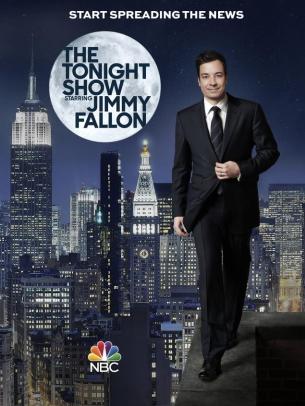 Jimmy Fallon’s ascension to the Tonight Show throne – even if that chair doesn’t have the luster it once did – is imminent.
 Technology has already fundamentally transformed the music industry in less than a generation, technology is in the process of
 I wasn’t quite as prolific in 2013 as I was in 2012, as this will be “only” the 72nd post on this blog this year. However, part of that had to do with the fact that I’ve been writing for three other outlets on a regular basis (Cover 32, Hogs Haven, and A New Voice), plus some occasional work elsewhere (Uproxx).


 The Axis of Ego
Five Tips for Paying Off Your Student Loans
All of my student loans are paid in full as of this month. Therefore, as a newly minted AMERICAN HERO, I thought I would share my wisdom with folks who haven’t yet crossed that sacred threshold. I thought these pointers would be particularly helpful to people under 40 (like me) who are facing, or are projected to face, major financial hurdles as a result of their crippling debt.
Here are some tips, courtesy of a Real American:
1. Study Hard: Do well at your current level of schooling, and the next level will be cheaper. There is a lot of scholarship money out there. People will trip over themselves to give it to you. Filling out paperwork is a pain in the ass, especially when you’re 17 (or even 21 or 35), but the fact that you’re simply willing to fill it out puts you ahead of most of the other lazy people who populate your generation. There’s no excuse for not getting at least a little scholarship money if you’re even a mediocre student.
2. Be Good at Standardized Tests: Especially when you’re moving on to grad school, nailing a standardized test can count just as much, if not more, than your undergrad GPA (except for medical school applicants). Get a high score now, pay less later. When in doubt, pick “C.”
3. Don’t Get Married: Courtship costs money. Weddings cost money. As Haddaway asked lo those many years ago—what is love (when compared to the sweet satisfaction of knowing Sallie Mae or MOHELA no longer has its hooks in you)? I’m paraphrasing the lyrics, but we all know that that was the obvious subtext. Love won’t keep your electricity on. Love won’t put a roof over your head. You certainly can’t eat love. But that extra few hundred bucks a month can do all of that—and more! IMPORTANT PROVISO: If your potential spouse is an earner, or is, like, super-rich or something, marriage and paying off loans may not be at cross-purposes. Choose wisely.
4. Don’t Have Children: Marriage costs money, but kids cost a lot of money. And, unless you hit the jackpot in an “Olsen Twins”-type scenario, there’s not even a potential for a ROI like there is with #3 above. Avoid. Again, what is the joy of bringing another life into this world, one to whom you can impart your values, when measured against the pleasure of knowing you can quietly mutter “There, but for the grace of God, go I” whenever one of your classmates talks about having to sell his car to get creditors off his back? Easy call.
Don’t be like this loser!
5. Go to College in the 1990s: Everyone knows that tuition costs have skyrocketed in recent years. I graduated from college in 2000, so most of my undergrad career occurred in the 90s. So, despite going to an excellent, fairly expensive school for that era, my bills were still moderately lower than what someone attending a middle-of-the-road university could expect to pay today. The solution: Go to college in the 90s. You’ll save a bundle. IMPORTANT PROVISO: Going to college in the 80s is probably an even better idea, but I can’t speak to that from personal experience.
Following these five simple tips will help you to pay off all of your student debt in a decade (or less!), freeing up the remainder of your 30s to rationalize your poor life choices and to mock losers who complain that they can’t get a high-paying job with their laughable philosophy, sociology, or art history degrees.
Share this: