
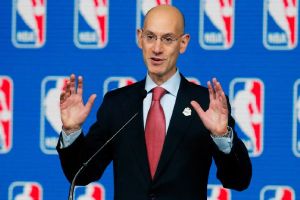
 With the Donald Sterling saga now more-or-less concluded (at least the portion that won’t take place inside of a courtroom), I was thinking about NBA Commissioner Adam Silver’s press conference on Tuesday afternoon.
There was simply too much momentum against Sterling at this point for the outcome to be anything other than what it was. Although Silver was clearly quite nervous at the outset, I thought he did an admirable job under scrutiny heretofore unprecedented during his tenure.
There was one major exception—one big mistake.
Q: . . . And also in determining what the punishment would be, including the suggestion to the Board of Governors, did you take into account Mr. Sterling’s past behavior, or was it just based on this one particular incident?
ADAM SILVER: In meting out this punishment we did not take into account his past behavior. When the board ultimately considers his overall fitness to be an owner in the NBA, they will take into account a lifetime of behavior.
Emphasis mine. Silver going out of his way to say that Sterling’s past conduct wasn’t taken into account for his permanent ban was a mistake. It’s a problem on three levels:
1. First off, there’s this: What Silver said, strictly speaking, is probably a partial lie. It’s a lie told either for strategic legal reasons, or to protect David Stern’s “legacy,” or both.
2. The actual racist conduct perpetrated by Sterling for years is much more of a concern than the dumb, illegally-recorded ramblings of an old, horny sleazeball. This has been addressed by several commentators, perhaps best by Kareem Abdul-Jabbar. Although we live in the Age of Feelings, the “pain” some folks experience merely by hearing Sterling’s recent remarks is objectively much less impactful than the actual actions Sterling has taken against certain groups during his career.
3. These sanctions being based solely on the recording is hugely problematic. It creates a precedent whereby comments alone, without more, whether made in private or public, will presumably lead to a lifetime ban for an owner (or possibly even a coach or a player). That’s going to require a lot of inevitable line-drawing. This is the “slippery slope” Mark Cuban referenced.
Donald Sterling is the easy, slam-dunk case. He got what was coming to him—and what was, by most accounts, overdue. What about remarks that aren’t quite as galvanizing, over which there is at least slightly more disagreement? What happens at that point?
For example, Dick DeVos, the owner of the Orlando Magic, is a devout Christian who opposes gay marriage. Should the league “investigate” his comments? Should he be banned for life, now that a slight majority of Americans favor gay marriage? I’m sure I could get at least a couple of special-interest groups and a whole bunch of people on Twitter to answer that question in the affirmative. Or, should we have begun to analyze former Brooklyn Net part-owner Jay-Z’s lyrics (and accessories) with that kind of scrutiny?
I would hope not. And that’s to say nothing of what might happen if a player or coach were to make regrettable comments. On top of that, again, we seem to be sanctioning a “the end justifies the means” approach for getting this dirt in the first place.
So, how could Silver have still meted out this harsh punishment while side-stepping the precedent quandary?
I think the better move would have been for Silver to announce that this penalty was the result of a “totality of circumstances.” He could have said that these recorded comments cast Sterling’s past conduct in a more certain, damning light, and that all of it was taken into account when banning him for life.
That still wouldn’t have spared erstwhile commissioner Stern from some negative press in the weeks to come, but that will happen anyway. Taking a different approach would have made it much clearer that a lifetime ban is an extreme measure taken only under equally extreme circumstances, not a punishment that’s on the table any time a private conversation skews too far into territory that offends the sensibilities of civilized, mainstream society.
That’s an important distinction. In a world in which nearly everyone now carries a recording device at all times, this incident won’t be the last instance in which Silver has to deal with a comparable fact pattern. The question is whether he’ll be consistent (which may have impractical, damaging consequences of its own), or whether he’ll backtrack a bit once the fervor of this particular pitchfork-and-torch crowd dies down somewhat.
I’m guessing the latter, but that awkward situation could have been easily avoided with a slightly better answer for that one, specific question.
 For better and for worse, I am the same in “real life” as I am here, on the Internet. A lot of people aren’t. Especially folks who have strong opinions on sports or politics.
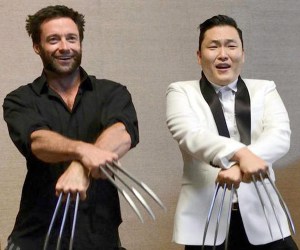 Hugh Jackman is always up for whatever.
 I first saw Gone with the Wind as a child. All of my elementary school classmates and I sat on the inexplicably-carpeted gym floor and spent the better part of a day watching the film. Just about the only thing I remembered about that experience was being amazed at how long the film is. Indeed, even as an adult, Gone with the Wind’s 238-minute(!!!) length is astounding.
 Batista was supposed to be that guy, returning after several years away from the ring (and coincidentally with a major role in Guardians of the Galaxy coming out this summer!!!) to win the Royal Rumble in January.
 Bligh and nearly everyone aboard his launch miraculously survived, leading to a subsequent trial for the few mutineers who could be found (including a couple of crewmen who likely weren’t mutineers, but served as handy scapegoats). Most of the mutineers couldn’t be found, however.
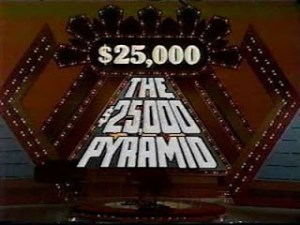 Yet, while both of these certainly involved a measure of skill, they were also very lucky. So much so, in fact, that Drew Carey’s, uh, muted response to the latter was due to his believing that the segment would never even air because the contestant had somehow rigged the Showcase Showdown (which wasn’t the case).


We’re Doomed (Or: A Defense of President Obama)
A recent Robot History Month (a/k/a “April”) visit to Japan by President Obama sparked some consternation among right-leaning media outlets. This bluster arose due to the fact that the president had the audacity to reciprocate a bow from an amazing, advanced, soccer-playing robot.
You see, dear reader, several recent news stories suggest that—as I’ve been saying for years—an eventual robot uprising is nearly inevitable.
Offering a similar warning of automated destruction is renowned physicist Stephen Hawking, who wrote a recent editorial that coincided with a landmark moment for the scientific community—the release of the Johnny Depp movie Transcendence. In his commentary, Professor Hawking said:
That’s right—as I’ve been saying forever, the robot threat is very real.
In fact, their takeover and destruction of mankind is practically a certainty.
That’s why I not only don’t blame President Obama for bowing to the soccer-playing robot, but I applaud his forward-thinking stance.
Here’s hoping that the robot-authored history of the far-future will recall both President Obama and myself as the visionaries that we were.
Share this: