
If you saw Full Metal Jacket years ago, or you’ve only watched a few key scenes on YouTube, you probably love the movie. Or, you think you do, anyway.
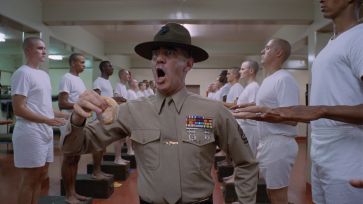 If it’s been a while since you’ve seen it, it may come as some surprise that Full Metal Jacket is part of a sub-set of films that include an iconic first portion, followed by a middling or flawed remainder that nobody really remembers because oh my God that first part! Other examples might include Stripes or Superbad, not that those films are anything like FMJ. Nor are they part of the Warner Bros. 50 Film Collection.
The first 45 minutes of Full Metal Jacket is virtually an extended montage scene, save for two voiceovers by Private Joker (Matthew Modine), which provide some cover exposition to allow the audience to understand how much time has passed. Those 45 minutes are absolutely riveting, as Drill Sergeant Hartman (R. Lee Ermey) whips young Marines into shape in preparation for the horrors of Vietnam.

 NCAA Football, long a staple of the EA Sports gaming line-up, will cease to exist after the current version—a least under that name.
 The next stop in my meandering, years-long journey through the
  The Color Purple has the distinction of being the most-nominated film not to win an Oscar. The 1985 adaptation of the Alice Walker novel earned an impressive 11 nominations, but failed to win a single Academy Award, tying the record held by mostly-forgotten 1977 ballet drama The Turning Point.
 There are two vital pieces of insight I’ve learned about

 And, so, the first (and, presumably, only) season of WandaVision came to a conclusion with Episode 9, “The Series Finale.” Before I get into the spoiler-y bits, let me recap the key finale expectations I had after
  Over the last month, WandaVision seemingly
 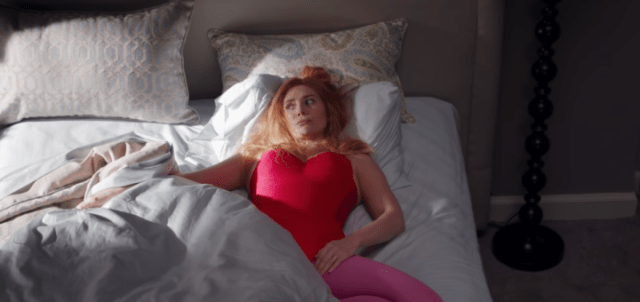 Over the past three weeks, WandaVision has gone from “show I watch every week when I get a chance” to “a


Timely Movie Review: The Last Duel
*SPOILERS AHEAD*
The problem was that, by that time, I barely cared.
The Last Duel has a structure that will be familiar to anyone who grew up with 1980s television.
The story comes in three “chapters,” each of which represent the respective point of view of the three main characters, played by Matt Damon, Adam Driver, and Jodie Comer—in that order. Now, as anyone who experienced that 80s TV trope can tell you, the whole point of this form of storytelling is to show that each person has a slightly different perspective on the same events (and also to give a break to writers who had to crank out 22 episodes’ worth of “WHATCHOOTALKINBOUTWILLIS?” jokes).
This technique can be used to highlight the more humorous personality traits of the characters, each of whom normally makes himself the singular hero of the same story. In terms of drama—and this is key—it can be used to show nuanced versions of the same event to get the audience to try to decide what objective reality might be.
Often, that reality can mean some mid-point among all of the versions. Or, the creator might leave it to the audience to debate and decide which is the actual “correct” story is, perhaps picking up on consistent threads in the various versions to separate fact from embellishment. This can be a captivating storytelling device when used correctly.
Note: Correctly.
That isn’t what happens in The Last Duel.
Continue reading →
Share this: