
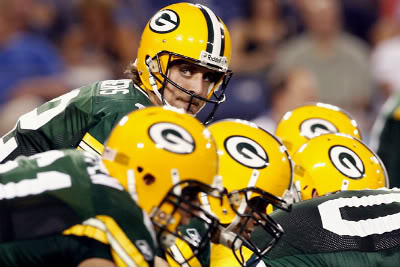
 The content on this site (planet?) has been a little too heavy lately, so allow me to inject a little positivity into the blog.
As a lifelong Washington Redskins fan, my perspective on the past few decades of “Super Bowl season” has been that of a begrudging realist. Knowing that the Team That Dare Not Speak Its Name doesn’t have a real shot at the conference finals virtually every year is as liberating as it is frustrating.
Since my team hasn’t been in the conference championship game since I was in the eighth grade (and I’m now in my 40s, so that’s quite a stretch), I focus simply on what Super Bowl match-up I want to see most and root accordingly.
Most years, there’s a very clear hierarchy. Yet, I realized a few days ago that we are absolutely blessed this year. Each possible combination boasts a solid storyline, thanks in large part to four great quarterbacks at various stages of their careers, all of whom are compelling in their own ways.
That fact will make my favorite football Sunday of the year even better. I prefer conference championship Sunday for a number of reasons—actual home games (albeit with crowd restrictions this year), the potential for weather (as we’ll see in Green Bay shortly), two games instead of one (or three), and a greater focus on football (and less on fluff and hype).
As far as I’m concerned, there is no bad outcome today in terms of the Super Bowl pairing. Here’s a rundown of the possibilities: Continue reading
 2020 wasn’t
  A few days ago (which feels like weeks at this point), I made some predictions about Tuesday’s election, and I talked about the “
 President Trump has never led in the polls. What’s more, the deficit he faces is far larger than the one he faced in 2016. The quiet signs of trouble in key districts that plagued Hillary Clinton aren’t present this time around. Trump trails in every swing state, sometimes by
  I’m shamelessly using this post to promote a piece I wrote for the Washington Examiner. This is a long-form magazine essay that updates and greatly expands some of the themes that I first discussed in
  Risky Business is a weird movie.
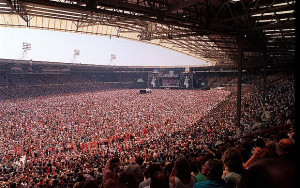 Thirty years ago today, the biggest musical acts in the world performed as part of a single, massive event, unprecedented in scope. Everyone from Madonna to the Beach Boys to the Pretenders to Paul McCartney helped put on the biggest concert in the history of the planet, before or since.


 The Axis of Ego
A Gateway to Endless Possibilities
Neither issue bothered me. I love a slow burn. Hell, LOST is on my Mount Rushmore of TV dramas. And, as someone who grew up at the dawn of “Nick at Nite” and perpetual syndicated reruns, I get the joke-within-a-joke about television’s longstanding tropes.
That all changed with the fifth entry in the series, appropriately titled “On a Very Special Episode . . . ”
More accurately, it changed with the final minute of that episode.
*SPOILERS AHEAD*
Continue reading →
Share this: