
 Today’s ruling in Obergefell v. Hodges represents the culmination of a perfectly executed public-relations campaign.
It is impossible not to be impressed by what this activist-driven effort accomplished—I mean in real terms, not the unserious victory slogans of the campaign itself.
In no particular order, it:
1. Successfully and fundamentally transformed the definition of “marriage,” and did so in a way that portrayed efforts to preserve traditional marriage as the novelty, rather than as the millennia-old status quo.
2. Successfully convinced a critical mass of the public that there is only one side in this debate, despite the fact that the side claiming the monopoly had only existed in any meaningful form for perhaps 20 years.
3. Successfully convinced a critical mass of the public that race and sexual orientation are directly analogous.
4. Successfully convinced a critical mass of the public (and jurists) that there is no possible argument against gay marriage—to the point where federal judges found that not permitting same-sex marriage is definitionally irrational, and had prominent left-leaning outlets calling the dissents simply “crazy.”
5. Successfully branded opponents as simple “bigots” for daring to hold a different view on a live political issue, going so far as to take punitive action against those who did not adopt the “correct” viewpoint.
6. Successfully portrayed the battle as, literally, love versus hate.
7. Successfully accomplished all of the above in about a decade.
My God, the magnitude of it is staggering.
Agree or disagree with the result, the sheer, total dominance with which their opposition was dealt defeat after defeat, constantly being depicted as evil and intellectually bankrupt—even when most of the public was still in favor of traditional marriage—is incredible.
How did this happen?
 The horrific, racially motivated murder spree by Dylann Roof also served as a call to action for those who see the awful events of Wednesday night as corroboration of their core beliefs about the poisonous nature of American culture.
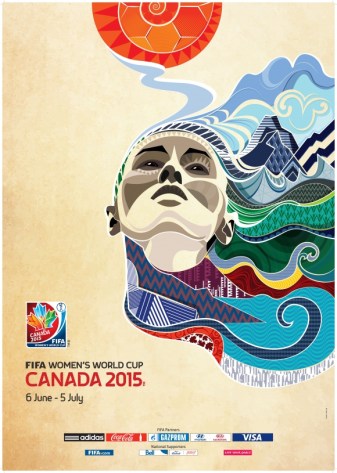 I’ve seen several spot-on, anti-FIFA commentaries in recent weeks, but
 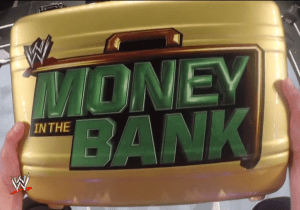 Money in the Bank is as pivotal as any non-WrestleMania show in determining long-term WWE storylines, rivaled only by the Royal Rumble. Obvious case-in-point: Seth Rollins wins the Gold Briefcase last year, and the company builds him as the top-heel-in-waiting, openly referring to him as “The Future of the WWE.”
 North by Northwest is like a James Bond film, except if James Bond were a nondescript advertising executive who, after a series of misunderstandings, accidentally and against his wishes becomes a de facto secret agent.
 The movie isn’t perfect. There are a couple of implausible moments (even by the relaxed standards of the film) that are used to keep the plot moving. The conclusion of the scene at the UN, which ends with a knife in the back, is particularly silly.
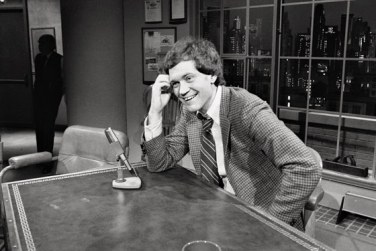 I’m also too young to remember a time when David Letterman wasn’t on the air. He took over the post-Carson timeslot in 1982. I initially became aware of Letterman first-hand during one of his early
 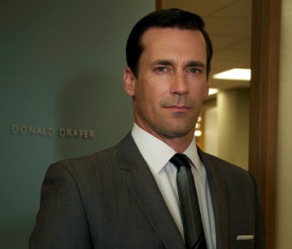 The resolution wasn’t perfect, but I think time will be kind to it.
 When I think of my personal ranking of the four best television dramas ever, I find myself putting Mad Men at the top of the “also receiving votes” table.


 The Axis of Ego
Untimely Police Procedure Review: Running Scared
One of the more powerful and sadly ubiquitous stories of the past year has been the strained relationship between local law enforcement and the public, particularly in certain poor, heavily minority communities.
Whether due to misguided militarization of police forces, general suspicion of police held by constituents, or specific incidents of brutality, officer conduct (or, more properly, misconduct) has been at the forefront of public discourse for much of the past ten months.
More often than we’d like to admit, of course, law enforcement itself becomes lawless. Just a few weeks ago, the Chicago City Council voted to award $5.5 million to victims of ongoing police torture that stretches back decades. That award was over and above the more than $100 million that the city has paid out in various other lawsuits against the police over the years.
With a backdrop of burning buildings, empty stadiums, and occasionally violent protests in mind, I thought it worthwhile to devote a post to the issue of police misconduct and community relations.
Therefore, here’s an in-depth recap of the police procedure in the 1986 Billy Crystal / Gregory Hines buddy-cop comedy Running Scared!
Continue reading →
Share this: