The debate over Indiana’s version of the Religious Freedom Restoration Act has already taken some curious twists and turns.
The initial response from opponents was to go to the playbook that has been so wildly successful over the past five years—label the law as “hate,” condemn its proponents, create wild scenarios that conjure Nazi-esque horrors.
 Except something was different this time. The law’s critics, probably overconfident because of their long winning streak, got a little sloppy. Their blanket condemnations were met on this occasion by some defiant, salient points from the other side. Namely, that numerous other states and the federal government have had similar laws for years, and, yet, somehow, those jurisdictions have avoided the descent into Jim-Crow-esque regimes promised as a certainty by opponents.
Faced with these inconvenient facts, RFRA critics have chosen two paths: One, taken by those like Apple’s Tim Cook, has been to ignore the realities of the application and history of these laws, and simply to continue to drum up opposition. Even politicians are not immune to this phenomenon. Now-Senator Chuck Schumer sponsored the original RFRA bill as a member of Congress, but condemned Indiana’s version this week. Governor Dan Malloy of Connecticut issued a ban on state-funded travel to Indiana over the RFRA, but his own state actually has an RFRA with broader language in some respects than Indiana’s legislation.
The second path has been to distinguish the Indiana law from other RFRAs because of some slightly different procedural points that permit its use as a defense in actions between private parties, rather than simply those where the state is a party. As noted by the Washington Post, this is a somewhat inconsequential distinction. However, critics have to highlight this difference to avoid an embarrassing situation in which many “good” states have this law, and where, for example, people like Barack Obama (as a state legislator) voted for these measures.
The reality is that, if someone opposes the IN-RFRA on the grounds that it might someday allow a court to find a conservative Christian may be able to decline to service a gay wedding, then that opposition should extend to some of the other RFRAs as well.
All these laws do, in fact, is plug a hole created by Employment Division v. Smith, a 1990 Supreme Court case which—briefly—held that laws of general applicability need not receive the highest level of scrutiny used in certain other First Amendment cases. The idea is that, if a law is simply a general one that happens to conflict with particular practices of a religion, it has a lower constitutional hurdle to clear than a law that specifically impacts religious practices.
The RFRA was an attempt to elevate such cases to the same strict-scrutiny standard that applies in cases involving direct infringement upon the free exercise of religion. That standard doesn’t mean that the plaintiff always wins, it means that the government must prove that it is advancing a compelling state interest in order to justify its alleged infringement on religious exercise.
A later case, Boerne v. Flores, held that the federal RFRA could not be used in state-level cases. That decision prompted a long list of states to adopt their own versions of the RFRA over the next several years. The laws have been used in a variety of contexts to protect religious objectors who seek to be absolved from following certain laws that clash with their religious beliefs, such as a ban on facial hair in a prison, or regulations pertaining to wheeled conveyances that are in conflict with Amish religious and cultural traditions.
The Mother Jones and Gawker crowds would have you believe the RFRA is something close to apocalyptic, but a decade or two of actual experience with these laws strongly suggests otherwise.
So, what’s really going on, here?
This is part of a bigger cultural shift—one I’ve discussed in the past.
Continue reading →


 The movie—which did take home the Best Picture Oscar for 1958—begins with a borderline-elderly, thick-accented Parisian breaking the fourth wall to explain that it’s the year 1900 and take the viewer through a tutorial on the courtship habits of turn-of-the-century Paris. After spying a very young girl running through the park, he breaks into an extra-creepy rendition of “Thank Heaven for Little Girls.”
 Either way, I’m baffled by the critical acclaim this movie received, especially after watching An American in Paris and the vastly superior Singin’ in the Rain. Most of the performers in the film are passable—at best—as singers. Perhaps not coincidentally, many of the musical numbers include significant chunks of lyrics that are more spoken than sung.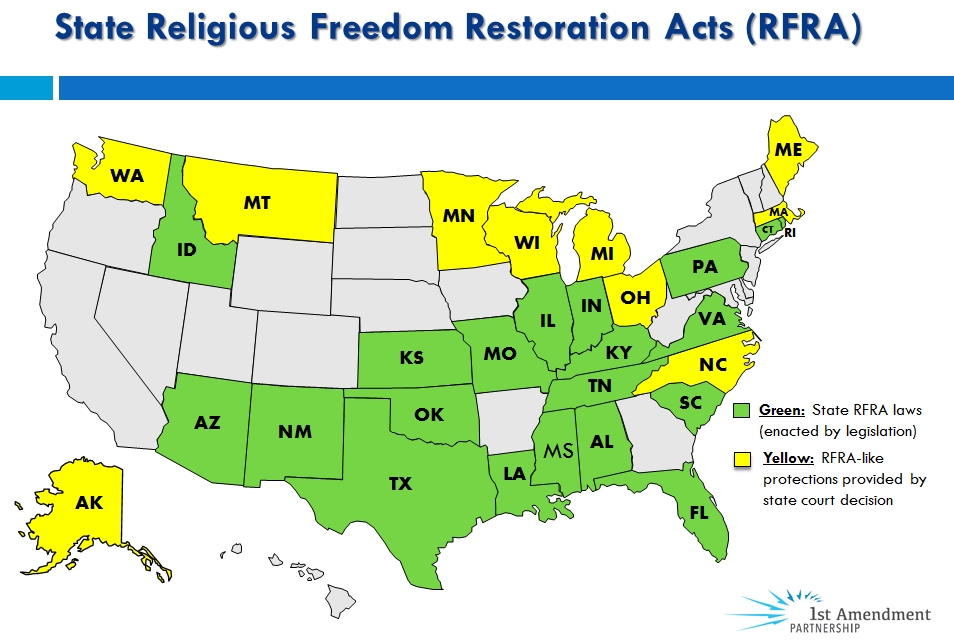
 That tradition carried on beyond 1985, of course—to the point where the WWF/WWE created a separate “wing” of its not-physically-real Hall of Fame just for celebrity involvement.
 With the news that University of Oklahoma President David Boren would be expelling two members of the SAE fraternity for singing a racial-slur-laden song, there has been an expected uptick in First Amendment experts in the comments sections of the news sites and social media outlets I frequent.

 About two months ago, I began commuting to Washington for a new job. Something very odd happened that first week, during one of the three days I spent in DC.
 A new job and shifting responsibilities caused my blog-related productivity to slip a bit. Overall, I published “only” 41 pieces in 2014, including this one.


At the End, What Do We Make of Mad Men?
The “Mount Rushmore of ________” is a tired construct at this point, but still serves a decent enough purpose: Trying to winnow down a presumably deep category to its four best examples can be a worthwhile exercise.
Mad Men has always faced a greater degree of difficulty than most of the other names that crack the list. Whereas the drama in, say, Breaking Bad includes literal life-or-death stakes, Mad Men is more of an examination of the relatable parts of our lives. It incorporates universal themes of identity, career, and family, and places them in a context that also melds those concepts to a cultural analysis of American history.
While that examination is part of what makes the show fascinating, there’s no doubt that it’s inherently easier to make a compelling television show about drug deals and murders than it is to make one about pitch meetings for now-defunct fast-food restaurants.
Yet, Mad Men has remained compelling more often than not, despite its focus on elements that aren’t so different from our own lives. In fact, I’ve always thought the show is at its weakest when it veers into more far-fetched territory.
Which brings us to Sunday night. Unlike other great television dramas, Mad Men doesn’t seem destined for a definitive conclusion. Whereas shows like The Sopranos or Breaking Bad or Lost or The Shield each defined a central conflict over the course of its last season, Mad Men, by its nature, has no such opportunity for make-or-break resolution.
Continue reading →
Share this: