
Down, down the memory hole we go. Where we stop, nobody knows.
I was born and raised in Richmond, Virginia. Despite growing up in the capital of the Confederacy, and later attending Washington & Lee (as in “Robert E.”) University, I have never owned, flown, or worn a Confederate flag, nor have I ever desired to do so. Not once. I think the decision to remove the flag from capitol grounds in South Carolina is the correct one, over and above being politically expedient.
That said, I knew that the announcement by Governor Haley would open the proverbial floodgates, as in-sync Democrats and Republicans grappled over which of them were on the “right-er” side of history.
Those of you with sharper long-term memories may recall that, not very long ago, this saga began as a horrifying story about a racially-motivated killing spree. The media transformed the discussion into an attempt to renew interest in two old favorites: Gun control (which, despite their best efforts, never gets traction) and the flag. Pressing every GOP candidate on the topic, and spotlighting any less-than-satisfactory answer, media attention was able to drive this issue to the forefront of American discourse within a matter of 48 hours after the capture of Dylann Roof.
 As I said, I support the flag being removed. But I would have couched it in terms of “Whatever one thinks about the meaning of the flag, it is indisputably a flag of rebellion and a flag that should not be considered sanctioned by this government via official display on state grounds.” Simple, clean, and it acknowledges a reevaluation of the flag’s place in contemporary culture.
But that’s not exactly what happened. The removal of the flag was framed, as Senator Tim Scott put it, in these terms:
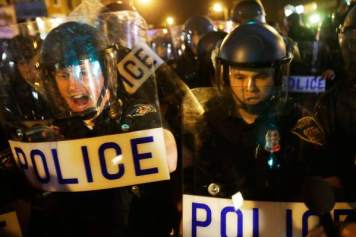 As someone who tries his best to make sense of American culture, politics, and society, I thought now might be as good a time as ever to delve into the touchy subject of how police officers interact with citizens as they stop civilized society from becoming a lawless hellscape.
 The horrific, racially motivated murder spree by Dylann Roof also served as a call to action for those who see the awful events of Wednesday night as corroboration of their core beliefs about the poisonous nature of American culture.
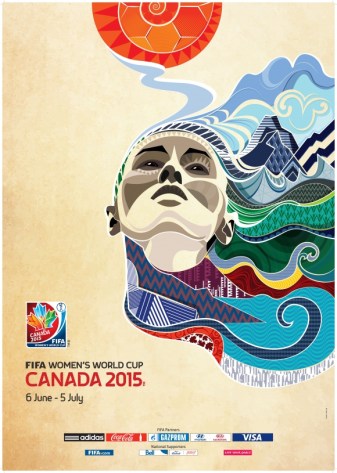 I’ve seen several spot-on, anti-FIFA commentaries in recent weeks, but
 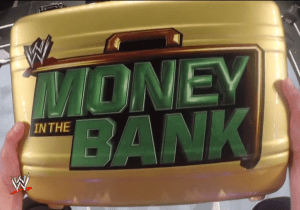 Money in the Bank is as pivotal as any non-WrestleMania show in determining long-term WWE storylines, rivaled only by the Royal Rumble. Obvious case-in-point: Seth Rollins wins the Gold Briefcase last year, and the company builds him as the top-heel-in-waiting, openly referring to him as “The Future of the WWE.”
 North by Northwest is like a James Bond film, except if James Bond were a nondescript advertising executive who, after a series of misunderstandings, accidentally and against his wishes becomes a de facto secret agent.
 The movie isn’t perfect. There are a couple of implausible moments (even by the relaxed standards of the film) that are used to keep the plot moving. The conclusion of the scene at the UN, which ends with a knife in the back, is particularly silly.
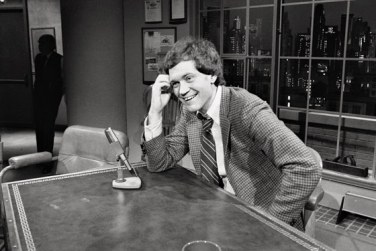 I’m also too young to remember a time when David Letterman wasn’t on the air. He took over the post-Carson timeslot in 1982. I initially became aware of Letterman first-hand during one of his early
  The resolution wasn’t perfect, but I think time will be kind to it.


30 Facts for Live Aid’s 30th Anniversary
Even though I was only seven years old, I could sense that Live Aid was important.
The strange thing is that I realized just a few days ago that the 30th anniversary was coming up. The relative lack of fanfare struck me as odd. Rather than trying to write a comprehensive history about the event, or even an analysis of the concert itself, I thought I would string together 30 facts about Live Aid to commemorate the occasion.
1. Live Aid began as an offshoot of Band Aid, a group of mostly-UK artists who recorded a one-off charity single, “Do They Know It’s Christmas?” The song was so popular in late 1984 that organizer Bob Geldof decided to see if he could parlay that momentum into a mega-concert that would likewise raise funds to assist in combating African starvation, particularly in Ethiopia. Several of the participants in Band-Aid (such as the members of U2) were suspicious about Geldof’s motives.
2. Band Aid also inspired USA for Africa, a similar effort in the United States that produced “We Are the World,” written by Lionel Richie and Michael Jackson.
3. Geldof was invited to the recording of “We Are the World” in Hollywood, but became enraged when he saw the $50,000, caviar-rich spread that had been donated by local, high-end restaurants. He lectured the Americans present on the hypocrisy of enjoying the finest food while recording a record devoted to fighting famine. Geldof stormed out, but producer Ken Kragen chased Geldof down and talked him into returning. “We Are the World” went on to earn $45 million, or about four times as much as “Do They Know It’s Christmas?”
Continue reading →
Share this: