
At long last, after eight years, I’ve reached the home stretch of the Warner Bros. 50 Film Collection. The list below covers all but the very last film in the collection, which I decided to save for a final post. This group continues the “wildly uneven” phase of the collection, with some very strong movies mixed in with some selections that probably made sense when they originally sold this set, but seem a little curious in hindsight. Here we go.
Million-Dollar Baby (2004): I like Clint Eastwood a lot. I like Morgan Freeman a lot. They’re both great, as is Hillary Swank. But what begins as a much-better-than-usual underdog sports movie turns into bummer Oscar-bait. Granted, it worked like a charm, as Million Dollar Baby took home four major Academy Awards, including Best Picture, Best Director for Eastwood, Best Actress for Swank, and Best Supporting Actor for Freeman. All three of them were deserving. But there’s a difference between tackling difficult subjects and emotional masochism, and I think this movie crosses that line. Like, to the point where it comes off as a Simple Jack-type parody. To cite one example: Maggie’s cartoon-character mother, wearing attire from a trip to Disney earlier that day, trying to get Maggie to sign over her fortune (by placing the pen in her mouth, since Maggie is paralyzed), but nonetheless stopping to remind Maggie “you lost!” This is bad. Bad. Flat-out. Over the top. To say nothing of the fact that she wouldn’t have “lost” the match in real life. And that’s before we get to the suicide attempt and, ultimately, the case for euthanasia. That doesn’t mean the movie doesn’t have great performances (it does), but it’s absurd and eyroll-inducing.
 The Departed (2006): There is so much to like about this movie. It’s easy to write it off as just another Scorsese crime picture, but the distinctive hook of two entangled sides with opposing spies in their ranks makes for a riveting, tight film. With a lot of movies like this one, even good versions, there’s a sense of inevitability about what will ultimately happen. Heat (which is quite good) is a little like that. This one keeps dropping pieces of the proverbial puzzle into place, taking some unexpected turns right through the final scene. I’m not even bothered by Nicholson’s on-again / off-again accent. Great movie, and a well-deserving Best Picture winner. Continue reading
 Curiously, the

 As I move forward through the
  Continuing my strong stretch run through the
  In accordance with
  Way back in 2014, I set out to review every film in the
  The Last Duel, Ridley Scott’s latest effort, has much to like. The cinematography is very strong. The focus on the legal norms of the day, including the loophole of sorts exploited to arrive at the duel itself, is highly interesting. The action scenes are excellent. In particular, the titular duel is so well-choreographed that I actually wasn’t
 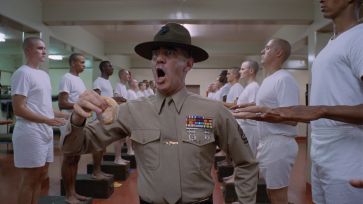 If it’s been a while since you’ve seen it, it may come as some surprise that Full Metal Jacket is part of a sub-set of films that include an iconic first portion, followed by a middling or flawed remainder that nobody really remembers because oh my God that first part! Other examples might include Stripes or Superbad, not that those films are anything like FMJ. Nor are they part of the


 The Axis of Ego
Timely Movie Review: The Northman
*SPOILERS AHEAD*
The last new film I reviewed was The Last Duel, and that was because I was so frustrated by how good the film could have been, had the filmmakers not made a few ill-fated storytelling choices.
I’m now moved to write about The Northman for the opposite reason.
The film is certainly well-made, acted, and directed—but probably not a film I’ll go out of my way to see again. If I’m grading it, it might be a “B-minus” overall (for scale, I thought The Batman was at least a B-plus, and Lost City was probably around a C-minus or D-plus). The Northman was a solid, worthwhile movie.
But what struck me was how unusual The Northman is. This film does a lot of things that other movies do not, will not, or cannot do. Director Robert Eggers made some strong choices that could have gotten him into trouble, figuratively and perhaps literally, but his skilled filmmaking deftly avoided those pitfalls.
Continue reading →
Share this: