 Our infallible BCS system produced a customarily-frustrating result tonight, to the surprise of almost no one.
The BCS passed over Oklahoma State for its BCS “National” “Championship” game. The Cowboys, losers of one double-overtime contest, dominators of Oklahoma, and champions of the Big “XII” Conference, lost out in favor of SEC title game non-participant Alabama. This, despite the fact that said BCS title game will feature the Crimson Tide playing the team that already defeated it, LSU.
Crimson Tide coach Nick Saban’s self-serving take: “I don’t see why there’s any reason to keep mulling over the [BCS] system . . . LSU’s the #1 team and we’re the #2 team.”
Nothing to see here, folks! It’s self-evident that this is the right title game because the somewhat arbitrary system we’ve created says so, and a prominent figure from the almighty SEC agrees! Move along, move along.
Adding to the frustration factor is the fact that the BCS has a gifted spin machine that released this just seconds after ESPN made the official on-air announcement of the games:
(Headline: Best Regular Season in Sports Ends as BCS Announces Bowl Pairings)
“Once again, the BCS has delivered a regular season that was exciting from opening kickoff to final whistle, while providing a great championship matchup,” said Bill Hancock, Executive Director of the BCS. “The top-ranked teams in all the polls—LSU and Alabama—will meet in the national championship game, and there are four other outstanding BCS bowl pairings. No. 3 Oklahoma State made a real run at the top this weekend; this year the difference between number two and number three was the closest ever under our existing rankings formula. Congratulations to the student-athletes and their coaches. An exciting and memorable bowl experience awaits all of them, and I can’t wait to watch.”
Putting aside the obvious fact that the BCS is never going to say anything other than “The BCS is great,” there’s an inherent problem with the logic of their argument.
Namely, the entire premise of the BCS is that the regular season matters. In fact, the motto of the BCS is (the now sadly ironic) “Every Game Counts.”
The results tonight raise the potential paradox that, if the lynchpin of the pro-BCS argument is that every regular season game is of great importance, then how can a team that already lost to LSU get a second chance to play the Tigers?
More to the point, what happens if Alabama beats LSU by, say, three points? What does that prove? Or what happens if Oklahoma State beats Stanford by five touchdowns?
The internal logic of such a system collapses upon itself: The same squad got two cracks at the top-ranked team in the country under a scheme premised on the notion that each regular season game is of the utmost significance.
If the assertion is that we don’t need a playoff because the regular season is a quasi-playoff, then a rematch proves this assertion to be false.
The BCS can’t have it both ways. If the system is legitimate because the “enhanced” regular season is an adequate substitute for a postseason tournament, then giving the same team two shots to win one game against LSU is unfair. Not just to Oklahoma State, but to LSU.
In a system with a playoff, my contention would be absurd: The Green Bay Packers know that there’s a reasonable likelihood that they’ll have to defeat a team they already played to win another world title. But the alleged “beauty” of the BCS is that a regular season game between two top teams is a “must-win” game.
Even within the context of the diminished expectations of a non-playoff system, is there any combination of outcomes (short of an LSU victory) that would produce an entirely-satisfactory and agreed-upon “champion?”
In the circular thinking of the BCS apologists, I’m sure the answer is a self-evident, “Yes, because, by definition, we have a championship game. It says so on the cover of the program.”

 Tom recapped the trip to New York City for Survivor Series here, but Mike stopped by for a more thorough discussion of the events of that weekend. They go about an hour on the podcast this time around, covering the background of getting to go to New York (0:00-6:00), arriving, seeing various WWE Superstars, and settling in (about 6:00 – 19:00), the lunch with Mick Foley (about 19:00 – 30:00), stories from Survivor Series itself (about 30:00 – 39:00), Mick’s comedy show and UCBW (about 39:00 – 53:00), and, finally, the Carnegie Deli (about 53:00).
 It’s been an unusually-long time since I’ve posted, but there’s a good reason for that: I knew that writing about the trip I took to New York City a little over a week ago was going to take some time. I’ll elaborate on some of these details in a podcast I hope to record soon, but here are the basics.
 I recently helped my mom prepare for a yard sale by going to her house and sifting through my childhood toys so that she could label and group them more accurately. As an only child in a middle-class family, I had a fairly substantial collection growing up: G. I. Joe, Transformers, and, to a lesser extent,
 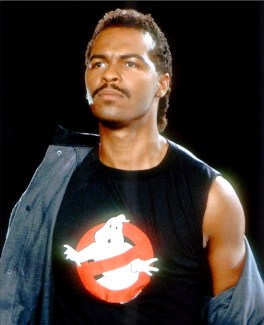 In honor of our impending Halloween weekend* and the zombie Moammar Gaddafis and slutty-fill-in-the-blanks who come with it, I thought it only fitting to scrutinize arguably the greatest sort-of-Halloween-themed song of all time.
 As I sat around on Sunday staring at a RedZone “


 The Axis of Ego



This Strange, Twitterfied World
The profound changes to our culture wrought by the rise of the Internet as a whole are obvious to all. But I’m fascinated by one very surprising and strange way in which Twitter specifically altered the manner in which we interact with strangers – particularly famous ones.
I recognized the song two notes in, as Transformers holds the unlikely distinction of being the movie I’ve seen more times than any other in my entire life, thanks to my 1987 bout with chicken pox.
In any event, I tweeted the following to Punk following the show: “When deciding on soundtrack for the Johnny montage, did you at any point consider Stan Bush’s Dare?”
Dare was the other Bush-penned anthem on the Transformers soundtrack. Naturally, the question was one of my (semi-)amusing quips, more a wink and a nod to indicate that I got the reference. I never expected Punk to respond to this, one of the thousands of tweets he gets each day. And he didn’t.
But you know who did?
Stan Bush.
Yes, in this bizarre world in which we find ourselves in soon-to-be 2012, my tweet directed at a famous person was intercepted by a third-party famous person, who then responded to the non-famous person who crafted it originally.
Bush wrote the following (as he did to a couple of other folks): “Dare has a bit of a wrestling connection as well these days,” then linked to this video, which was a live performance of Dare during indy promotion Chikara’s “King of Trios” tournament.
There’s something bizarrely egalitarian about Twitter. Even as there are numerous tiers of popularity among the denizens of the site, just as there are in the non-online world, there’s one key feature that distinguishes it from a pre-Twitter society: Members of one strata have a direct, instantaneous method of connecting to those from another strata – and that works in both directions.
Younger people may not find strange the notion of a famous person they’ve never met interacting with them, but, for people old enough to remember life without the Internet, this can be a perplexing experience.
Share this: