
Tiger Woods won the AT&T National over the weekend. Victories by Woods aren’t as rare as some would have you believe (he’s the only three-time winner on the Tour this season), but they obviously don’t come with the frequency they once did. His three wins this season represent the most tournament titles he’s had since winning six times in 2009 before suffering injury-addled, winless campaigns in 2010 and 2011.
There was some historical significance attached to this particular victory: It was the 74th of Woods’ legendary career, putting him ahead of Jack Nicklaus on the PGA’s all-time wins ledger. Woods now trails only Sam Snead, who won 82 tournaments.
Nicklaus, of course, still holds the vaunted major title record with an incredible 18 championships. Woods stands at 14. His likelihood of breaking Snead’s record seems greater than surpassing Nicklaus,’ but the possibility of the latter is still considerable.
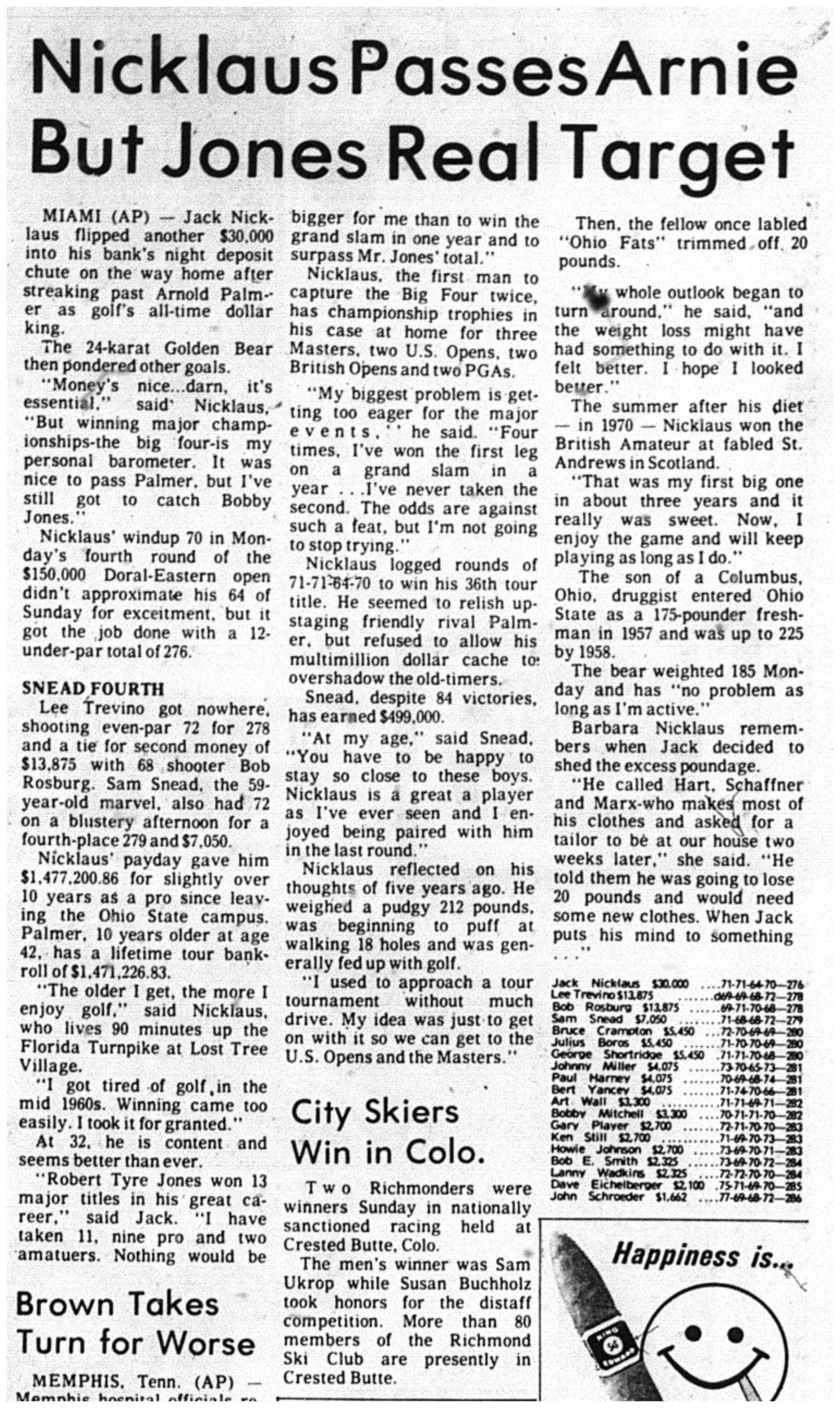 By sheer coincidence, I happened to spot the article to the right while doing research on Saturday, the day before Woods passed Nicklaus by winning the AT&T. The story dates from 1971, when Nicklaus had earned a then-record of his own, winning the Doral-Eastern Open to pass Arnold Palmer as golf’s all-time money leader—by winning a “hefty” $30,000 for his championship.
Yet, the title of the article says it all: “Nicklaus Passes Arnie, but Jones Real Target.” The Golden Bear explained that, while winning money was nice, he was totally focused on the major record. Nicklaus had won nine professional majors at the time, and Jones (who played at a time when the U. S. Amateur and British Amateur were two legs of golf’s Grand Slam) still held the record with 13 total majors.
The quotes from the Bear strike me as surprisingly candid by today’s standards. In fact, he talks openly about not only wanting to surpass Jones, but wanting to surpass Jones by winning a Grand Slam. The comments also read like they were paraphrased by a sportswriter, not taken verbatim. “Robert Tyre Jones won 13 major titles in his great career. I have taken 11 . . . ” and “The odds are against such a feat . . . ” don’t sound like Nicklaus speaking off-the-cuff.
The take-home point from the article is that Nicklaus focused on the majors, and other records (including Snead’s) were of marginal relevance to him. I think the relevance and value of his honesty on the subject was especially great at that particular moment in history. Remember, Nicklaus was only halfway to his eventual total of 18 majors when he expressed the point of view that winning majors was the primary criteria by which he would measure his career. It would have been much easier to say that after he had gotten to sixteen or seventeen, or at least after he had surpassed Jones. Nicklaus didn’t shy away from putting that pressure on himself, though. He seemed to revel in it.
Woods was more reserved after his win last Sunday, but that speaks more to the era than it does to the intentions of the athlete. There’s little doubt that Woods’ top priority for the remainder of his career is to own the major record before he retires.
As an interesting footnote to the story from ’71, Sam Snead’s record (reported there as “84” wins, probably due to different math as to which were “recognized” tournaments) is also addressed by the author in this article about Nicklaus’ victory. Why? Because Sam Snead finished fourth in the same tournament.
Fifty-nine-year-old Sam Snead.
 Man, what a few weeks we’ve had, America! There’s so, so, SO much to discuss. I wanted to try to cover as much ground as I could, yet time constraints conspired to limit my options.
 Whichever way the case comes out, we’ll hear screams that this case marks the “end of freedom” or some such thing. Just keep in mind that the law being struck down doesn’t represent any real obstacle to a system that will ultimately produce universal healthcare, and that the law being upheld doesn’t represent any real obstacle to its being repealed a year from now. I can guarantee you that one of those two arguments (depending on the outcome of the decision) will be making the rounds on cable news all week.
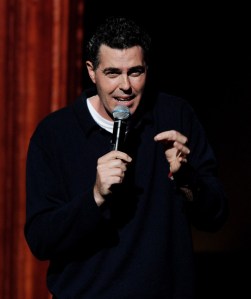 I invite anyone who’s a fan of Carolla (as I am), or anyone who has a newfound (or longstanding) hate for the Aceman to read Cauvin’s article. In it, he brilliantly distills the two major questions related to this kerfuffle. Namely, whether what Carolla said had any merit, and, perhaps more to the point, what the “Carolla isn’t funny / Carolla is irrelevant” line of criticism actually says about those who lobbed it (Spoiler: He is both funny and relevant).
 Why? As with most things on the show, it’s not entirely clear, and it may never be. The most obvious explanation would be depression over Lane and, by extension, Adam. Don feels responsible for both suicides, and he receives no absolution even when he unilaterally decides to reimburse Lane’s widow with the $50,000 buy-in Lane provided to SCDP after Lucky Strike pulled out.
 It’s safe to say that I’m a


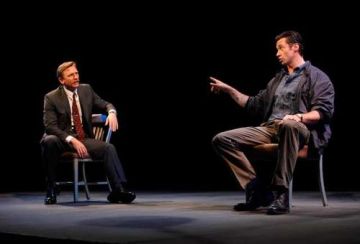 Yet, neither lost his appetite for the stage. In fact, they joined forces to play the characters in a two-man Broadway production of “A Steady Rain.” The play follows the complicated lives of two Chicago police officers. It received strong reviews upon its debut, broke the record for highest weekly gross by a non-musical, and drew interest from Steven Spielberg for a movie adaptation.


The Bare Minimum
I have a rant chambered, but I need to preface it with some explanation so as to make the limited scope of the diatribe perfectly clear.
I have a package being delivered via UPS. In the interests of fairness, I should say both that my experience with UPS in the past has been generally good, and, secondly, that I am in no way suggesting that the contents of this package are urgent or even important by any measure.
However, I am a principled man, and there is a principle involved.
I don’t know whether it was magic or luck or merely the fortuitous blowing (and, really, is there any other kind?) of a particular trade wind, but the package made its way up from Florida to its destination city of Richmond, Virginia in record time, arriving late in the evening of the sixth.
And then it just sat there.
For three-and-a-half days.
Continue reading →
Share this: