
The profound changes to our culture wrought by the rise of the Internet as a whole are obvious to all. But I’m fascinated by one very surprising and strange way in which Twitter specifically altered the manner in which we interact with strangers – particularly famous ones.
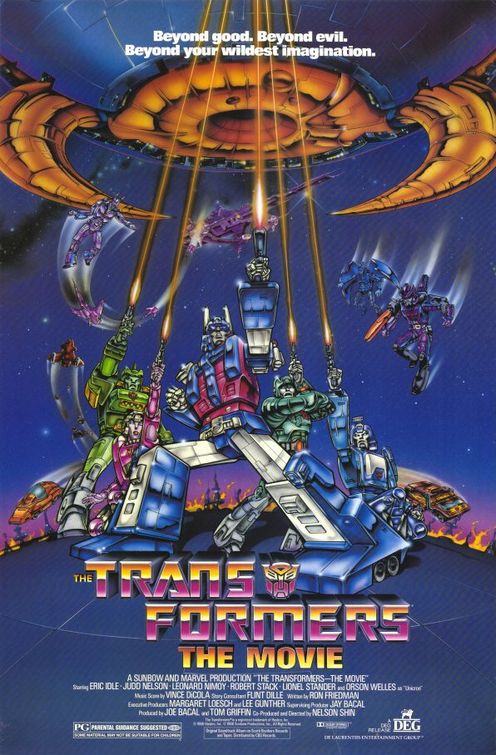 Professional wrestler C. M. Punk unveiled a derisive montage of clips from the career of his current storyline nemesis John Laurinaitis (f/k/a Johnny Ace) on this past Monday’s episode of WWE’s Monday Night RAW. The montage was set to an edited version of The Touch by Stan Bush, a song originally used in 1986’s “Transformers: The Movie,” and later memorably used in “Boogie Nights.”
I recognized the song two notes in, as Transformers holds the unlikely distinction of being the movie I’ve seen more times than any other in my entire life, thanks to my 1987 bout with chicken pox.
In any event, I tweeted the following to Punk following the show: “When deciding on soundtrack for the Johnny montage, did you at any point consider Stan Bush’s Dare?”
Dare was the other Bush-penned anthem on the Transformers soundtrack. Naturally, the question was one of my (semi-)amusing quips, more a wink and a nod to indicate that I got the reference. I never expected Punk to respond to this, one of the thousands of tweets he gets each day. And he didn’t.
But you know who did?
Stan Bush.
Yes, in this bizarre world in which we find ourselves in soon-to-be 2012, my tweet directed at a famous person was intercepted by a third-party famous person, who then responded to the non-famous person who crafted it originally.
Bush wrote the following (as he did to a couple of other folks): “Dare has a bit of a wrestling connection as well these days,” then linked to this video, which was a live performance of Dare during indy promotion Chikara’s “King of Trios” tournament.
There’s something bizarrely egalitarian about Twitter. Even as there are numerous tiers of popularity among the denizens of the site, just as there are in the non-online world, there’s one key feature that distinguishes it from a pre-Twitter society: Members of one strata have a direct, instantaneous method of connecting to those from another strata – and that works in both directions.
Younger people may not find strange the notion of a famous person they’ve never met interacting with them, but, for people old enough to remember life without the Internet, this can be a perplexing experience.
 Tom recapped the trip to New York City for Survivor Series
 It’s been an unusually-long time since I’ve posted, but there’s a good reason for that: I knew that writing about the trip I took to New York City a little over a week ago was going to take some time. I’ll elaborate on some of these details in a podcast I hope to record soon, but here are the basics.
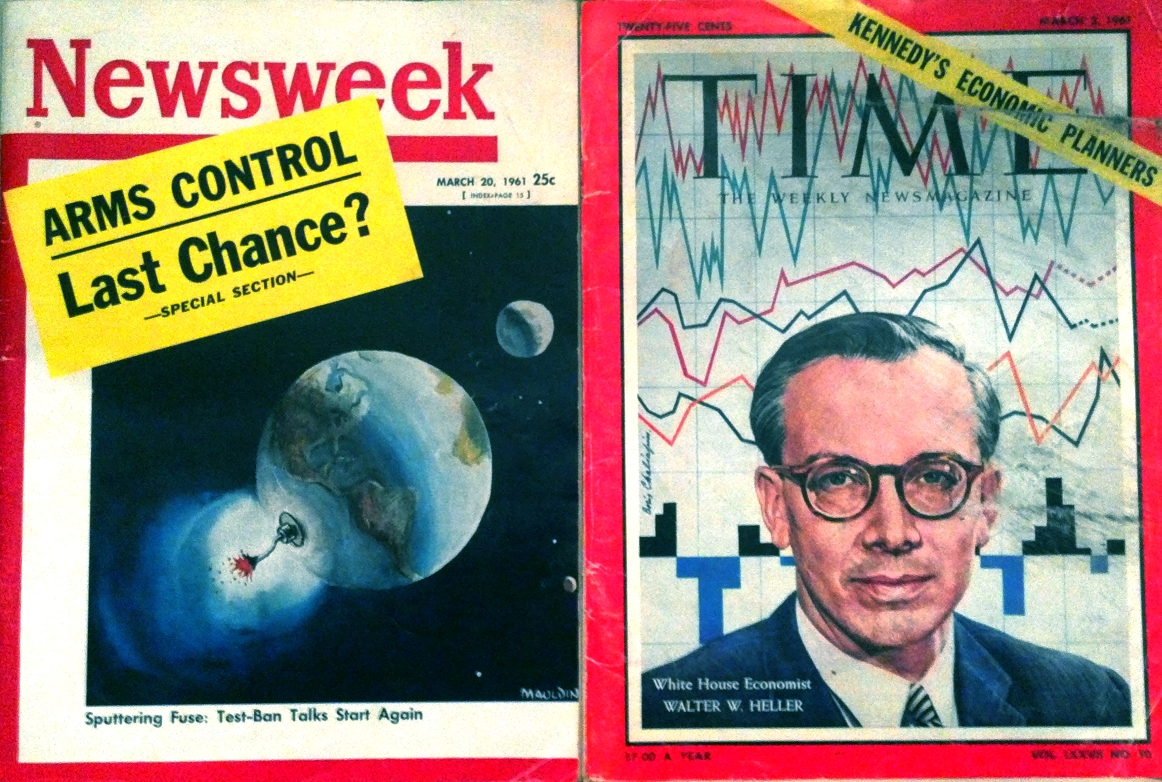

 I recently helped my mom prepare for a yard sale by going to her house and sifting through my childhood toys so that she could label and group them more accurately. As an only child in a middle-class family, I had a fairly substantial collection growing up: G. I. Joe, Transformers, and, to a lesser extent,
  In honor of our impending Halloween weekend* and the zombie Moammar Gaddafis and slutty-fill-in-the-blanks who come with it, I thought it only fitting to scrutinize arguably the greatest sort-of-Halloween-themed song of all time.


 The Axis of Ego


Spooky Action at a Distance
Teams of scientists working with the CERN Large Hadron Collider announced this week that the elusive Higgs boson has quite possibly been observed for the first time. The level of certainty provided by the recent run of data isn’t sufficient to consider this a “discovery” as yet, but the early indications suggest a noteworthy shift toward confirmation of the existence of the particle that plays a crucial role in the Standard Model. Namely, scientists believe that the Higgs boson is the “God particle” that endows matter with mass.
The Higgs boson is the last remaining predicted but unobserved particle in the Standard Model. The Standard Model is sometimes referred to as a “Theory of Nearly Everything” in that it addresses many, but not all, facets of the laws of physics in our universe. The Higgs boson is one portion of this model that is itself a component of a larger (but still incomplete) attempt to solve a scientific mystery spawned decades ago.
Contemplated by a layman such as myself, the field of theoretical physics may be understood as a science of reconciliation.
Limited technology, beginning with our own eyes, allows us to observe various phenomena. The rotation of the Earth. Magnetism of certain materials. Electricity via a lightning bolt. As technology improves, we are able to observe and analyze an ever-increasing number of aspects of the natural universe. One role physics plays is to explain not only what it is that we are observing, but also how these phenomena relate to one another and interact, especially when independent observation of them leaves explanatory gaps, or even contradictions.
Continue reading →
Share this: